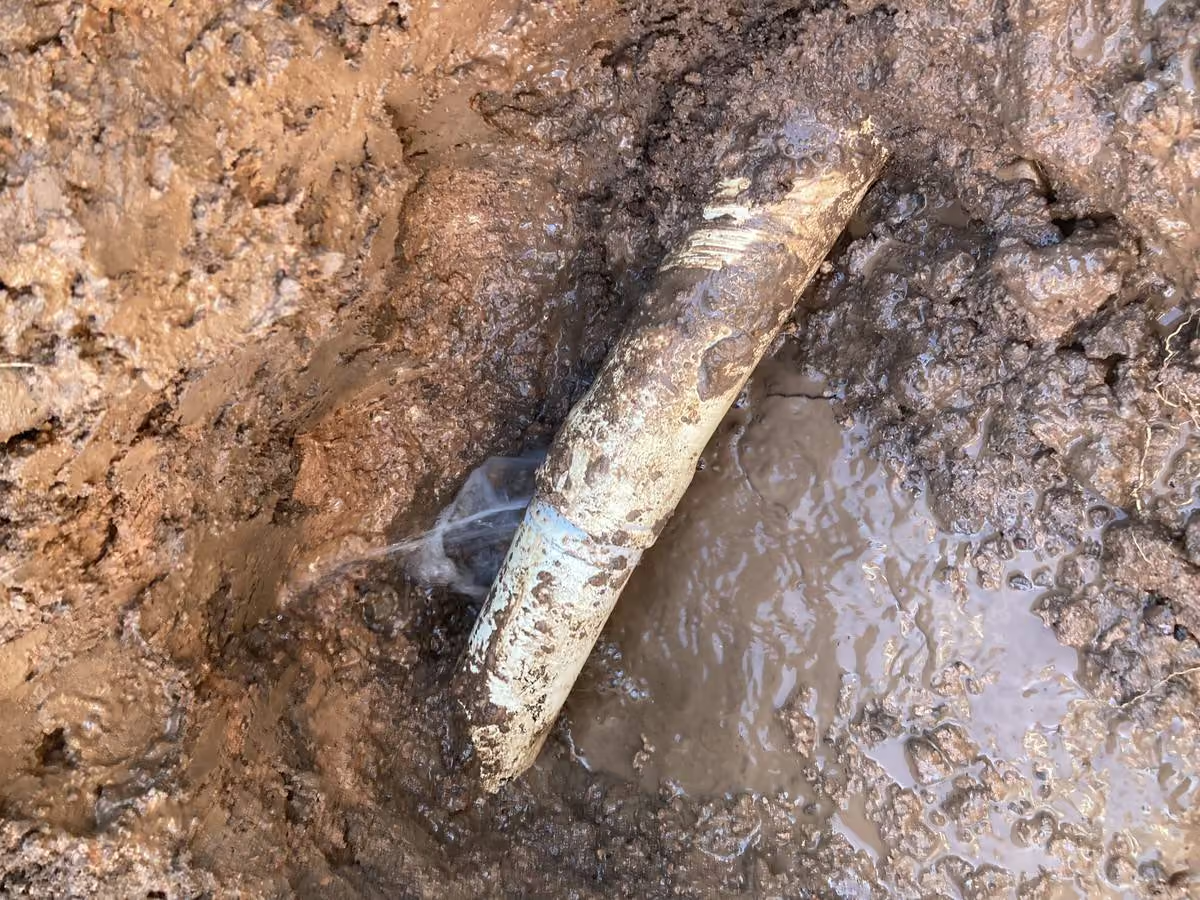
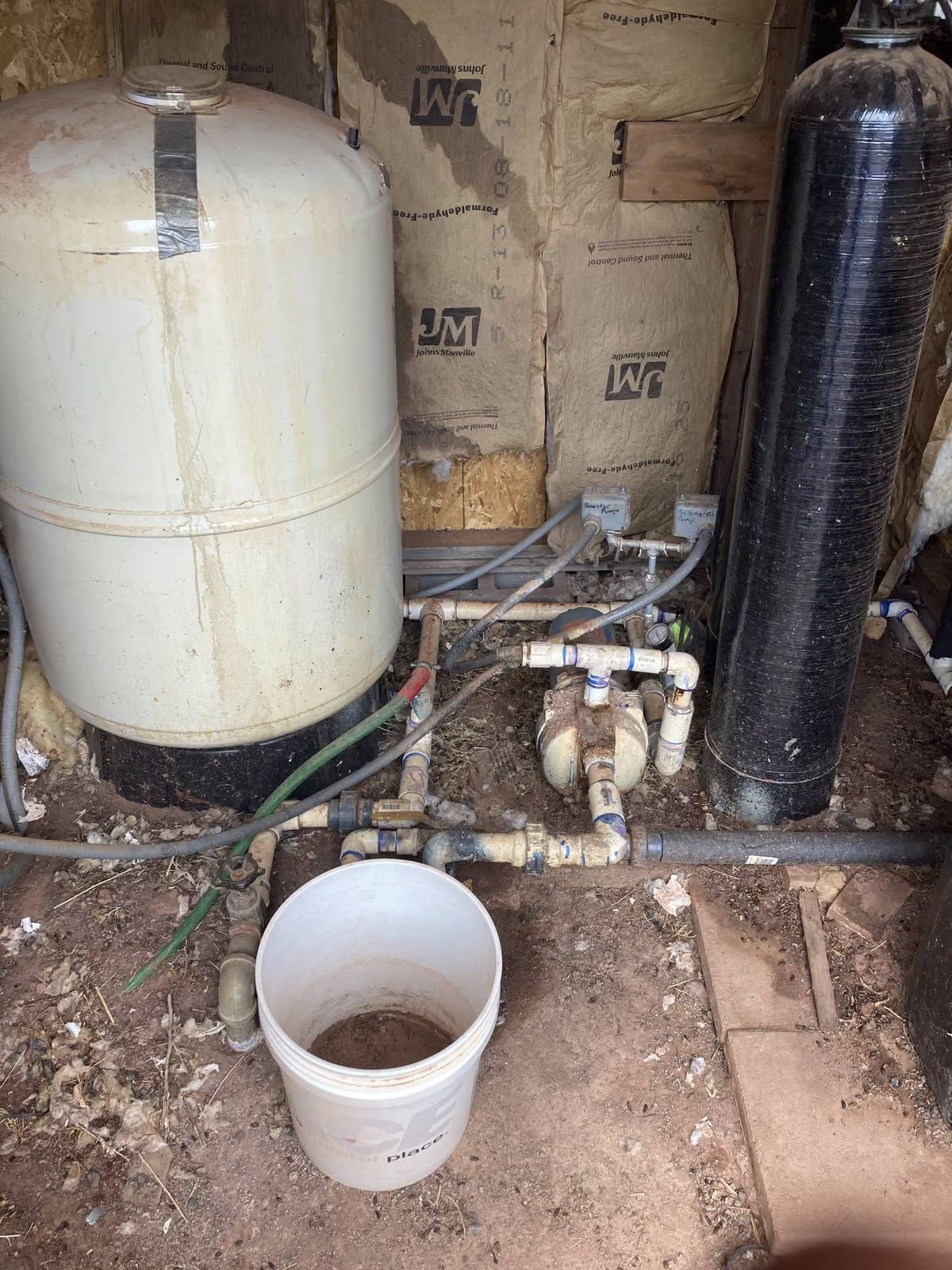
Every utility has to spend money on infrastructure eventually. Mains wear out. Lift station pumps don't last forever. Hydrants fail flow tests. Collection system pipes collapse. The question isn't whether you'll need to replace things. It's whether you'll see it coming or get caught off guard.
That's what a capital budget is supposed to do. It's your plan for replacing aging infrastructure before it becomes an emergency. But at most small utilities, capital improvement planning starts with whatever the superintendent can remember, whatever the engineer recommended five years ago, or whatever number the board will approve without too many questions.
It doesn't have to work that way.
The $50,000 binder on the shelf
Here's a pattern we see all the time: An engineering firm comes in, does an assessment, and delivers a capital improvement plan. It's 80 pages in a three-ring binder. It cost $20,000 to $50,000. It sits on a shelf.
The plan isn't bad. The problem is it's a snapshot. It was accurate the day it was written, and then the system kept aging, breaks kept happening, and new repairs changed the picture. Within two years, the plan is outdated. But nobody's paying another $50,000 to update it.
What you actually need is a living record, one that gets updated every time your crew touches an asset. Not a plan that gathers dust. A plan that gets better every week because it's connected to the work your crew is already doing.
What the board actually needs to hear
Here's the thing most superintendents learn the hard way: a capital budget isn't really about infrastructure. It's about making a case to people who don't know infrastructure.
Board members and council members aren't engineers. They don't know what a 4-out-of-5 condition rating means or why a force main with negative remaining useful life should keep them up at night. But they respond to three things: specific numbers, a clear priority order, and confidence that the data is real.
"We think we need about $150,000 for capital improvements" gets a shrug and a smaller number.
"Here are our 12 most critical assets ranked by risk. Here's what we've spent maintaining each one over the past two years. Here's the replacement cost for each. And here's the five-year plan showing the order we should tackle them", that gets funded.
One of our customers at Salt Creek put it this way: their asset management plan "helped us build our 2023 budget and gave the Board of Directors a clear path of what needs repaired and in what order." That's the difference. Not just a dollar amount, a clear path.
And at Floyds Knobs, Indiana, their board's reaction said it all: "For the first time, they can actually see what we've been doing all year." When the people controlling the budget can finally see the work and the need, the conversation changes.
The two numbers that make a capital budget defensible
A capital budget that actually gets approved comes down to two things: what each asset costs you to keep running, and which ones need replacing first.
Most small utilities can't pull either number. The maintenance history is in a filing cabinet. The condition assessments are in someone's head. The cost data is lumped together in the accounting system under "repairs" with no link to specific assets.
When those two numbers exist (cost history per asset and risk-based priority) capital improvement planning stops being a negotiation and starts being math.
Cost history per asset
If your crew is logging their work against specific assets, with the labor hours, the parts from inventory, and the equipment time on each task, you build a cost history on every piece of infrastructure in your system. (Here's how that cost tracking works in Ziptility.)
Over months, that cost history tells you things nobody could see before. That section of 6-inch main on the east side that's had four repairs since 2022? You can see the total spend. That lift station where you keep replacing the same float switch? The cumulative maintenance cost is sitting right there, tied to that specific asset.
You stop tracking "how much we spent on repairs this year" and start tracking "how much this asset has cost us."
Risk-based priority
Cost history tells you where the money's going. But the board also needs to know: which assets do we replace first?
That's what asset management plan scoring does. Each asset gets rated on condition, likelihood of failure, and consequence of failure, each on a 1-to-5 scale. Those three scores produce a criticality rating that ranks your most urgent needs. A sewer force main serving 200 homes with a high failure likelihood and no redundancy ranks above a hydrant on a dead-end street. It's the same risk-based framework engineering firms use in those $50,000 assessments.
The difference is where the scores come from. A consultant walks the system once and scores everything in a week. Your crew touches these assets constantly, they know which valve is getting harder to turn, which pump is making a new noise, which line backs up after every rain. When they score the condition and risk as part of closing out a task, you get ground-level accuracy that no one-time assessment can match.
Building the five-year plan
You don't need a complicated financial model. You need four things lined up for each asset: what you've spent maintaining it, what it would cost to replace it, how critical it is, and how much useful life it has left.
With those four numbers, the capital plan practically writes itself.
Find the repeat offenders. Which assets keep showing up in your work orders? Which ones have maintenance costs that are climbing year over year? A 30-year-old ductile iron main that costs you $2,000 a year in repairs is fine. One that cost $4,200 last year, $6,800 this year, and has a condition rating that keeps dropping. That's a line item.
Rank by risk, not by age. A 50-year-old pipe in good condition with low consequence of failure can wait. A 20-year-old force main in poor condition serving a hospital cannot. The criticality rating does this ranking for you. Age matters, but risk matters more.
Flag the crossover point. There's always a moment where cumulative maintenance costs pass the replacement cost. Some assets hit it fast, cheap equipment that breaks constantly. Others take decades. But if you're tracking both numbers on the same asset, you can see exactly when you've crossed that line. That's the moment repair stops making sense.
Spread the spend. Not everything needs replacing this year. Use the risk ranking to sequence your replacements across three to five years. The most critical assets go first. The ones with more remaining life and lower risk scores get scheduled further out. The replacement cost field on each asset gives you the dollar amounts. Add them up by year and you've got a capital improvement plan with real numbers behind every line.
That's not a wish list. It's a plan built from data your crew collected during their normal work.
What this changes at budget time
When you walk into budget season with this data, you're having a fundamentally different conversation. Instead of defending a number that came from your gut, you're presenting evidence.
You can show the board a specific asset, say, a collection system main that's been repaired three times in two years, and lay out the maintenance cost history, the current condition score, the replacement cost, and the criticality ranking. You can explain that the data doesn't come from a consultant's one-time visit or an engineering firm's binder from 2019. It comes from your crew's daily work, updated every time they touch that asset.
That specificity is what gets capital budgets approved. Not because board members suddenly understand infrastructure, but because they can see that you do, and you've got the numbers to prove it.
A living plan, not a shelf decoration
The $50,000 binder was obsolete in two years because nobody was updating it. A capital plan built from your crew's ongoing work stays current because the data keeps flowing in. Every task they close, every condition score they update, every part they pull from inventory, it all feeds back into the same asset records that drive your capital priorities.
Your crew doesn't do any of this for the sake of capital planning. They do it because it's how they manage their work every day. The capital plan is a byproduct of a system your crew actually uses, not a separate project that competes with their real job.
That's why the data's reliable. Nobody filled out a special form for the board. They just did their work, and the data was there when you needed it.
Want to see how maintenance data and risk scoring come together to build a defensible capital budget? Request a free demo →