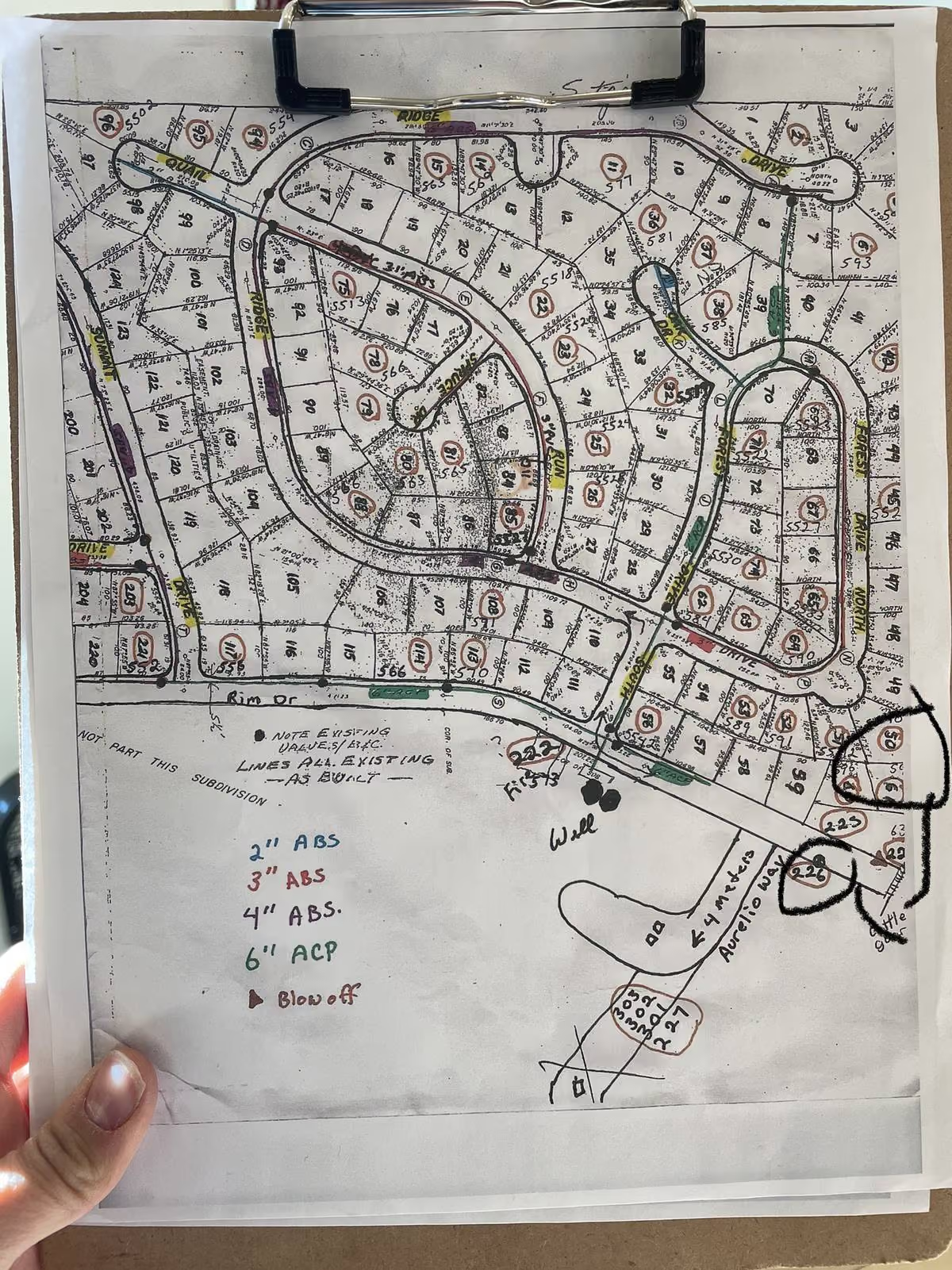
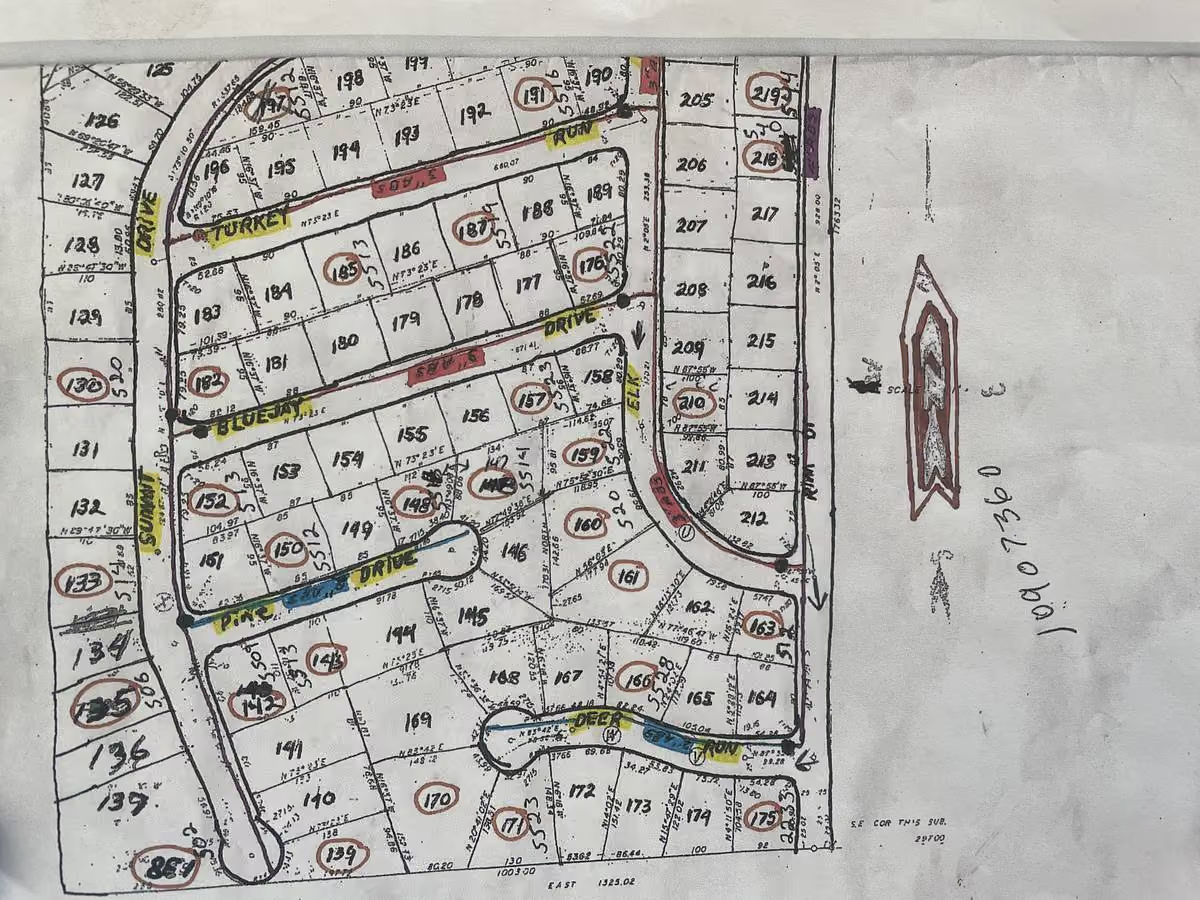
Two weeks ago in Whitewater, Kansas, an operator uncovered a manhole under a road that had been paved over for at least 10 years. The homeowner had lived there 14 years and never knew it was there. The town's asset database had no record of it. That's a single moment that summarizes a much bigger problem: utility asset database management is not a one-time import. The database stays accurate only when reality is captured back into it, every day, at the moment work happens.
This post explains why asset databases drift away from reality, what that drift costs you, and the two disciplines that actually prevent it.
Why asset databases drift in the first place
Every asset database starts clean. A vendor onboards your data, every valve and hydrant and meter gets imported, and on day one the system matches the ground. Then real life happens. A contractor installs 200 feet of new main on Elm Street. A retiring operator caps an old service line. A meter gets relocated three feet to clear a fence. None of that finds its way back into the database, and 18 months later your "single source of truth for assets" is 20 to 30 percent fiction. The drift happens for three reasons, and you need to fix all three.
Operational drift. The field crew has no easy way to update the database from the truck. The new pipe gets installed, the operator writes it on a paper sketch, the sketch gets stuck in a binder, and the database never hears about it.
"I replaced the guy that had paper and pencil drawn utility maps. And that's what I have. There's some that have measurements, there's some that don't." (Andrew Hanna, Whitewater KS)
GIS drift. The asset data lives in a system that's locked away from the field. An ESRI deployment that requires a desktop login. A billing system that won't share its data. A paper map at city hall. Even if the field crew knew the change, they have no way to push it in.
Governance drift. Nobody's job description includes keeping the asset database current. The clerk does billing. The operator does repairs. The superintendent does reporting. The asset database has no owner, so it has no caretaker, and it slowly drifts.
What drift actually costs a small water utility
A drifted database fails you at the worst possible moments. The 2 a.m. main break where the valve isn't where the map says, and the crew loses 90 minutes finding it while a basement floods. The state inspection where you can't produce records of the last three years of hydrant flushing because half the hydrants in the database are flagged as a different size than what's actually in the ground. The board meeting where you're asking for $400,000 to replace a pipe that, it turns out, was already replaced in 2019, and the only person who knew that retired in 2023.
The hidden cost is the workaround. When the database is wrong, the field crew builds a parallel system in their heads or on paper:
"I've got painted marks on my curbs, and in my book, various locations, it's 2ft 5 inches from the curb, and so that's how I got to find it." (Andrew Hanna, Whitewater KS)
That parallel system works as long as Andrew works there. When he leaves, the workaround leaves with him, and now the database is wrong AND the institutional fix is gone too. This is the path that ends in "preventative maintenance data is stored in Bernie's brain." The drift compounds.
The risk also shows up in compliance. SDWA, LCRR, and PFAS rules all require the utility to know what's in the ground. A drifted asset inventory means a paper trail with holes in it, and inspectors notice. A utility that can't produce the records pays for the inspector's follow-up trip, the consulting engineer's audit, and sometimes a corrective-action plan filed with the state. Bad records are not free.
The cost most utilities never measure is the cost of decisions made on bad data. Replacement schedules built around the wrong pipe age. Flushing routes drawn around hydrants that don't exist. Service-line replacement plans that overcount or undercount lead. The asset database is the foundation under the budget and the operations plan. When the foundation drifts, everything built on it drifts with it.
How field-first workflows stop the drift
The only structural fix for utility asset database management is this: the database has to update itself at the moment work happens, by the person doing the work, on the tool they already have in their hand. Anything else is a discipline that eventually gives way to a busy day.
Update the database at the moment of work
Every work order should write back to an asset record automatically. When a crew member closes a service-line repair on the phone, that asset's record should already have the photo, the GPS pin, the date, and the name of who did the work. No second step. No "remember to update the GIS when you get back."
This sounds obvious. It is not obvious in the tools most small utilities use today. CityWorks and ESRI workflows usually require a desktop step to commit changes. Spreadsheets require a person to remember. Paper requires a person to transcribe.
Routine mapping maintenance, on the calendar
Even with field-first writes, some drift is unavoidable. Annexations happen. Contractors leave work undocumented. Asset mapping maintenance has to be a recurring task on someone's calendar, the same way generator runs and tank inspections are.
A workable cadence for a small utility: a monthly 30-minute reconciliation between the asset database and the billing system (every meter on the bill should exist in the asset database and vice versa), a quarterly walk of one neighborhood with the database open on a phone, and an annual full reconciliation against any new as-builts from engineers.
Photos and GPS lock in what was actually built
The most underrated drift prevention is a photo with a GPS stamp. When a contractor installs new pipe, a single photo of the work, taken on a phone, tagged to the asset, is the most reliable record. No tracing from a paper as-built six months later. No "the engineer's drawing says it's 18 inches deep but we know it's 12." The photo is the truth. The GPS is the location.
"At the end of the day, it just didn't work." (Lyndon Kern, Iola KS, on a previous asset management system)
The reason previous systems failed at most small utilities was governance. The administrators wanted it, the field crew didn't see how it helped them, and within a year nobody was entering anything. A field-first tool flips that: the operator gets value (the work order on the phone) before the administrator gets value (the report), and the database stays current as a byproduct.
How Ziptility helps
Ziptility was built around this exact problem. The whole approach to utility asset database management in the product is: every work order writes back to the asset record automatically. The operator closes a hydrant flushing task on the phone, and the hydrant's record gets the date, the flow reading, the photo, and the operator's name. No second step. No desktop sync.
Asset mapping maintenance is built in too. Recurring tasks can be set on any asset or group of assets, so the monthly billing reconciliation, the quarterly neighborhood walk, and the annual as-built sweep all show up on a schedule. The single source of truth stays current because the people doing the work are the people updating the database, on the tool they already use to do the work.
We work with utilities running GIS and asset management on systems from a few hundred connections to 10,000. If you've already read Your Utility's Data Lives in Six Different Places and You Don't Need Better GIS, You Need an Operations Record, this is the operating manual that goes with those: how to keep the consolidated record from drifting once you have it.
If you want to see field-first updates in practice on your actual data, you can request a guided demo. We'll import a slice of your asset records and run a 14-day trial against your real valves, hydrants, and meters.