Let's separate two things that get lumped together.
GIS is a design tool. It was built for engineering, hydraulic modeling, system design, capital project planning. It's powerful. It's accurate. And for the work it was designed to do, nothing is better.
But that work happens a few times a year. Maybe a new main extension. Maybe a capital improvement plan. Maybe a grant application that requires system maps. The engineer opens the GIS, does the analysis, generates the deliverable, and closes it. That's the cycle.
Running a water system is a different job entirely. It happens every day. And the record it needs looks nothing like a GIS.
What running a system actually looks like
Monday. You read 40 meters on the east side of town. One of them has a stuck register you note it, but you'll deal with it later because you've got two other things to do before noon.
Tuesday. Valve exercise day. You hit six valves. Two of them turn fine. One is stiff and takes some work. One won't close all the way. You make a mental note. Or you write it on a piece of paper. Or you tell the other guy when you see him at the shop.
Wednesday. Customer calls about low pressure. You drive out, check the meter, check the curb stop, check the line. It's not a leak. It's a partially closed valve from last month's repair that nobody reopened all the way. You fix it. Thirty minutes of driving for a two-minute fix because nobody logged the original repair against that location.
Thursday. You flush hydrants on the north side. You get flow rates and note two hydrants where the static pressure dropped since last year. That's worth investigating, but today you're just getting through the list.
Friday. State report is due. You need to document what maintenance was performed this quarter. You pull out the work orders, some are in the filing cabinet, some are in the truck, some you didn't write down because you were wet and cold and just wanted to get home.
That's one week. Fifty of those a year. None of it is engineering work. All of it needs a record.
An engineering map vs. an operations record
Here's the difference laid out plainly.
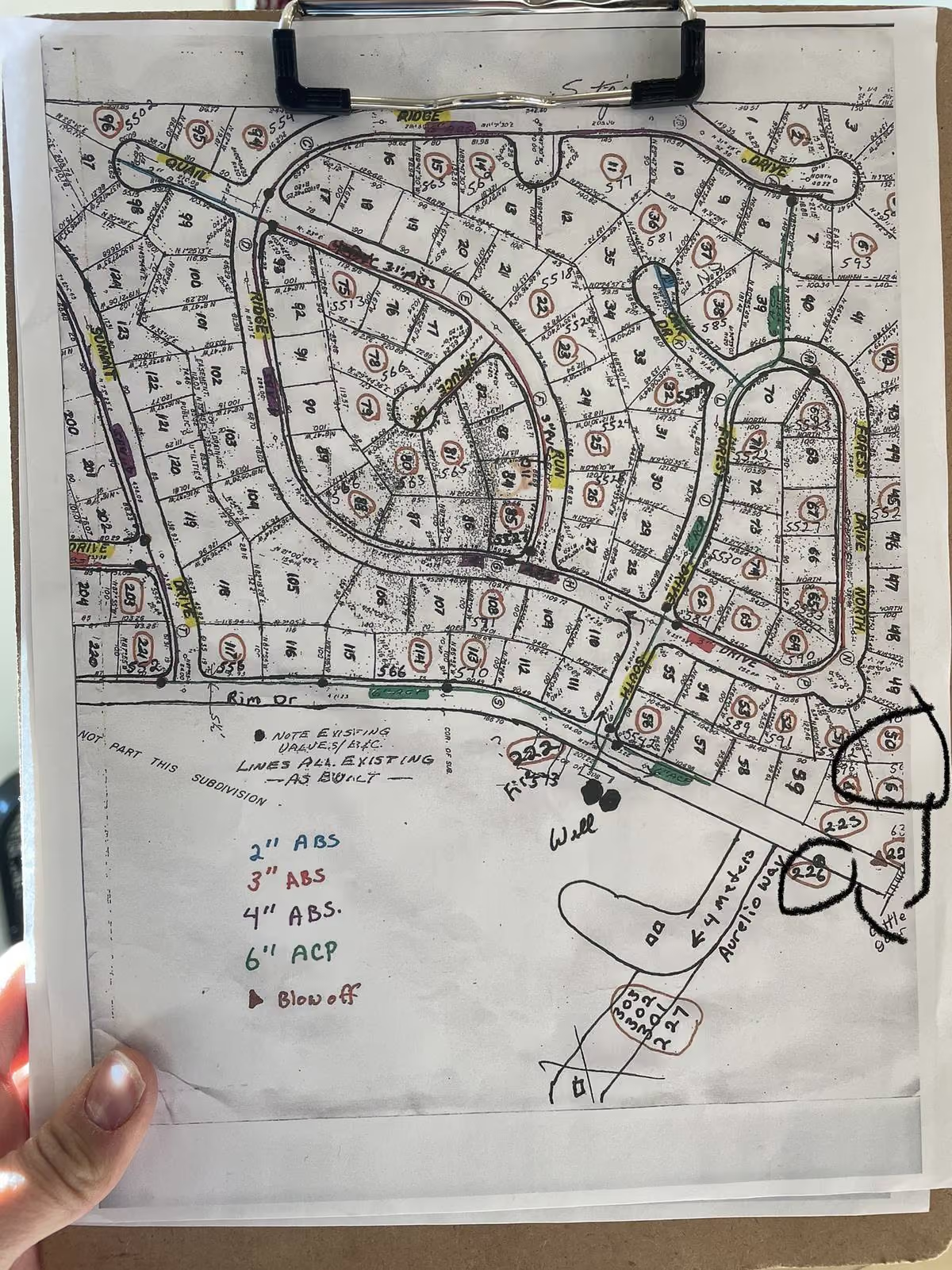
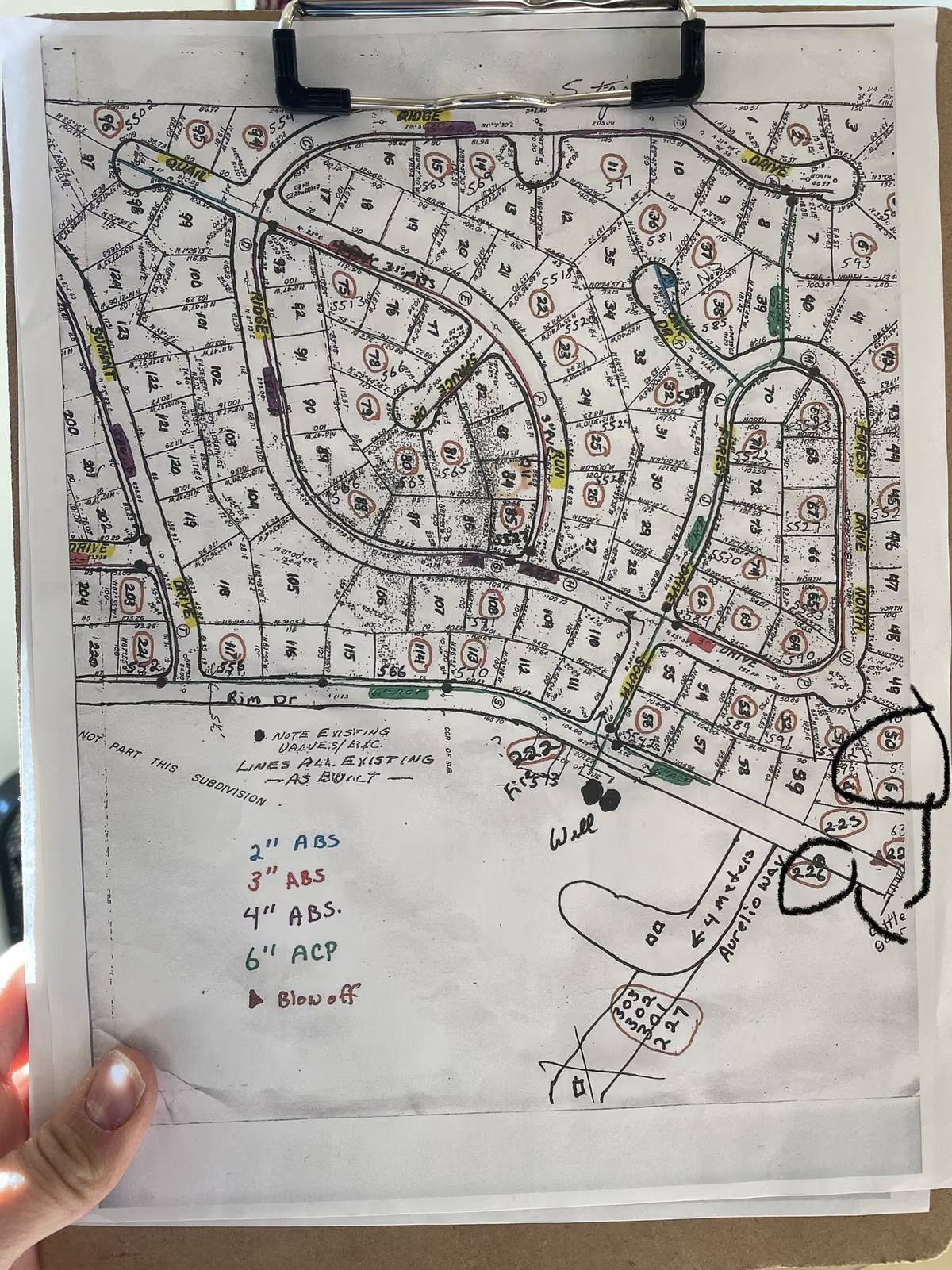
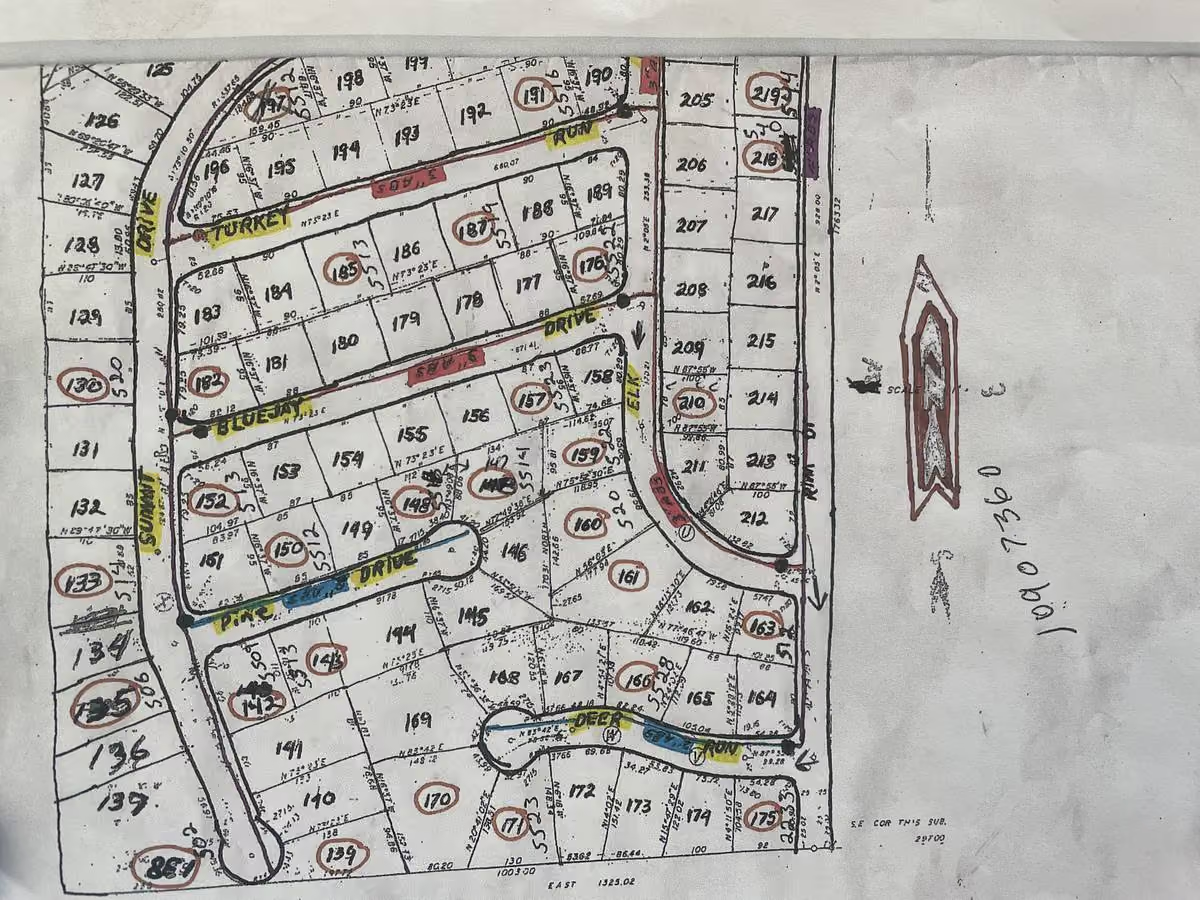
An engineering map tells you what was designed. Pipe diameter. Material. Design capacity. The location of assets as they were surveyed or installed. It's a snapshot, accurate as of the day someone professional drew it.
An operations record tells you what's actually happening. Which valves close and which ones don't. When the last leak repair was. What the crew found when they dug up the curb stop on Fourth Street. What that hydrant's flow rate was this year compared to last year. Where the main is actually three feet deep even though the plans say five.
The engineering map is useful to the engineer. The operations record is useful to every person who touches the system, the operator, the office person, the board member asking about capital planning, the next hire who needs to learn the system, and yes, the engineer too. The engineer actually gets better data when the field crew has been maintaining a living record.
Traditional GIS doesn't distinguish between these two jobs. It tries to be both, and it ends up serving the engineering side because that's what it was designed for. The field crew gets a map they can look at but can't meaningfully contribute to. So the operations data, the stuff that actually changes, never makes it in.
The filing cabinet is your operations record (and it's not working)
If you're honest about it, your operations record right now is probably spread across five places: a filing cabinet in the back office, a notebook in somebody's truck, a clipboard on the wall, the office person's memory, and the senior operator's head.
That's not a knock. That's how it works at 44,000 small systems in this country. It works because the people involved are good at their jobs and they compensate for the system's limitations with their own memory and effort.
But it breaks in predictable ways. The senior operator retires and takes the memory with him. The new hire can't find the records because they're scattered. The state calls and you need documentation you don't have in one place. The board asks what maintenance was done this year and you're reconstructing it from fragments.
RCAP's data is clear about this: there's considerable turnover in rural community leadership and we not just talking operators, but board members, clerks, part-time staff. Every time someone cycles out, the system loses a piece of its operations record because the record lives in people, not in a system.
What an operations record does that GIS doesn't
An operations record does three things your GIS can't.
First, it tracks the work against the asset. When your crew exercises a valve and logs it, that record attaches to the valve on the map. Next time someone visits that valve (whether it's tomorrow or two years from now) they can see every interaction it's had. That's not a layer in a GIS. That's a work history.
Second, it captures field knowledge in real time. The operator standing at the hydrant takes a photo. He notes the condition. He flags that the access is obstructed by a fence post. He does this during his regular work. He's not setting aside time for a GIS project. He's just doing his job, and the record builds as a byproduct.
Third, it produces documentation without extra effort. The work orders are already logged. The maintenance history is already there. When the board asks what the crew did this quarter, the report exists. When the state asks for asset records, they're current. When you apply for USDA or SRF funding, the capital improvement data is built from real maintenance history, not a consultant's estimate.
That's not something you add to your GIS. It's a different kind of tool doing a different kind of job.
Stop asking the wrong question
When someone says "we already have GIS," they're answering a question nobody asked. The question was never: do you have a map? Most systems have some kind of map. The question is: do you have a living record of how your system is actually being maintained, one that the field crew builds while doing their job, that survives staff turnover, and that produces the documentation the board and the state need?
That's an operations record. Your GIS is for the engineer's three projects a year. Your operations record is for the other 250 days.
And the beautiful part is they're not in conflict. The operations record feeds the engineering map. When the engineer comes in for a capital project, the data is richer because the field crew has been maintaining it daily. The engineer doesn't have to resurvey things the crew already documented. The asset inventory is current because people have been adding to it as part of their regular work.
You don't replace your GIS. You finally give the field crew a tool that was built for how they actually work and the engineer gets better data as a side effect.
Want to see what an operations record looks like? Book a demo, see how it works, or check what it costs for your system.