The retiring operator problem: How to preserve what your team knows
The silver tsunami is hitting water utilities hard. Here's a step-by-step process to capture what your retiring operators know before they walk out the door.
Blake Anderson
|
March 30, 2026
|
7 minutes to read
Key Takeaways
30-50% of the water utility workforce will retire in the next decade. At small systems, one retirement can mean losing decades of knowledge that was never written down.
What walks out the door isn't just equipment knowledge. It's real-world workarounds, seasonal patterns, emergency response protocols, and relationship networks with contractors, regulators, and suppliers.
Knowledge transfer doesn't require a special project. Start by having your experienced operator log their daily work against assets on a map, every valve turned, every note about what's different from the plans.
The goal isn't to document everything at once. It's to build the record as a byproduct of daily work over a few months, so the knowledge survives the retirement.
Dale worked at the same water system for 32 years. He knew which pump seized every winter. He knew why one treatment tank always ran hot. He knew exactly when to call the contractor before equipment failed, not after.
Three months after Dale retired, that pump died. Nobody saw it coming. Nobody knew the signs.
This is happening everywhere. They call it the silver tsunami: an entire generation of water and wastewater operators heading for retirement at the same time. The silver tsunami is hitting water utilities of every size, but small systems feel it worst. The American Water Works Association estimates that 30 to 50 percent of the utility workforce will retire in the next decade. And most of what they know has never been written down. This is the knowledge transfer challenge every small utility is facing, and there's a way to handle it.
We hear it in almost every conversation. "It's all in his head" is the most common thing utility managers tell us. One system in North Carolina told us flat out: "Preventative maintenance data is stored in Bernie's brain." Another said: "If that person was to ever move on to something different, well, we need to do meter reads... it's going to be a struggle."
The good news: you can capture this knowledge before it walks out the door. It takes a few months, not a few years. And you don't need anything fancy to start.
What actually walks out the door
Here's what you lose when someone like Dale leaves. It's four things, and most utilities only think about the first one:
1. How the equipment actually runs
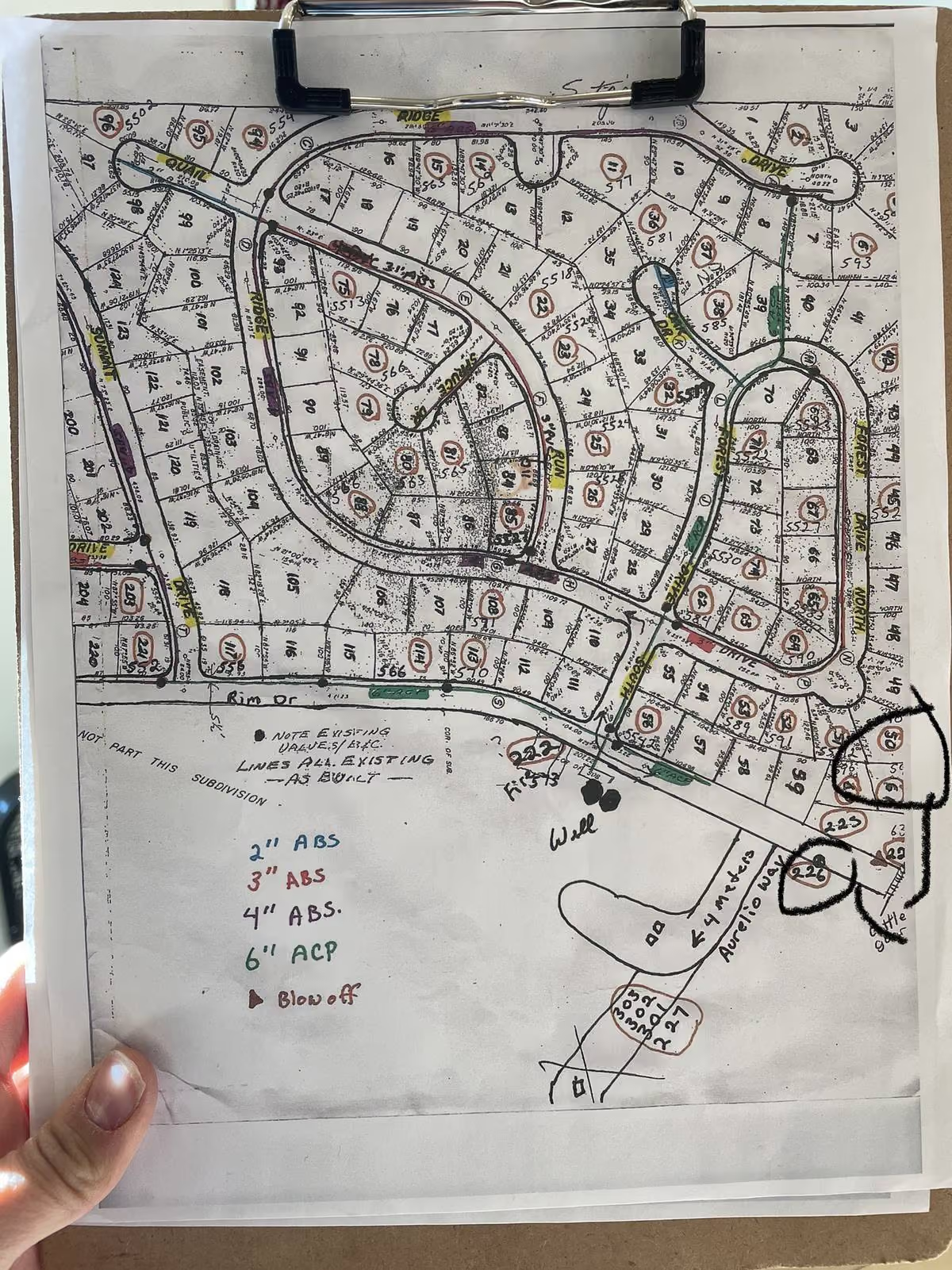
Your pump specs say X, but in practice it runs Y. Your SCADA system shows one reading, but the operator checks the actual gauge because the sensor drifts. These real-world tweaks and workarounds aren't in manuals. They're in someone's memory. And they should be tied to the asset on a map, not locked in a filing cabinet.
2. When things go wrong and why
Which seasons are hardest on your system? When does pressure drop on the main from the treatment plant? What time of year do leaks spike in the older neighborhoods? An experienced operator sees the pattern before the problem. A new operator runs blind for an entire season, maybe two.
3. What to do when it happens
"If the pressure drops below 45 PSI and it's after 6 PM, call Rodriguez. But if it's before noon, wait an hour first." These rules guide hundreds of small decisions every week. Without them, your new person either overreacts to everything or misses something that matters.
4. Who to call
Your operator knows which contractor actually shows up fast. Which engineer to call for a specific problem. Which supplier will work with you on payment terms. Which state inspector is reasonable and which one isn't. That relationship knowledge has real dollar value, and it disappears overnight.
How to start the knowledge transfer before they leave
Start now. Don't wait until someone announces their retirement date. Here's how to do it, step by step.
Start here: Have them write it down as they go
Have the retiring operator spend 30 minutes a week documenting one specific thing. Not their whole job. That's overwhelming. Pick one system, one piece of equipment, or one type of call.
Use a simple template. Just ask: "What should the next person know about this?"
Example entries:
"Backup generator: Start it monthly on the 2nd Tuesday. Let it warm for 10 minutes before load. If it won't start after 2 tries, call Jim at 555-0147, not the supplier, they'll take three days."
"When pressure drops on the south line: First check the isolation valve near Elm Street. It gets stuck. Usually just needs to be worked back and forth. If that doesn't fix it, then call."
Then: Sit down and ask the hard questions
Have a supervisor or someone who knows the system sit with the operator for 2-3 hour blocks. Go through your key systems one by one: treatment, distribution, storage, customer service, billing anomalies.
Record it on your phone. You don't need fancy equipment, just audio or video. You'll catch things you'd miss in writing. The way they check the gauge. The order they turn the valves. The pause before they say "and this is the part that'll get you."
Ask "Walk me through what you do when X happens", not "Tell me about X." You want the decision flow, not just the facts.
Next: Build a cheat sheet for the common situations
Take everything you've written down and build a simple cheat sheet for the most common situations. This doesn't need to be fancy. A table works fine:
Situation
First thing to check
If that works
If it doesn't
Low tank level (below 20%)
Is the valve open at the pump station?
Reopen and monitor for an hour
Call maintenance: could be the pump
Pressure complaints on south side
Isolation valve near Elm St (gets stuck)
Work it back and forth, monitor
Check for a break on the 6-inch main
High chlorine residual at tap
Check injection rate at the plant
Adjust down, retest in 4 hours
Flush the dead-end lines on Oak and 3rd
Print it out. Laminate it. Put it in the truck. Your new operator will use this every day for the first year.
Finally: Have the new person ride along
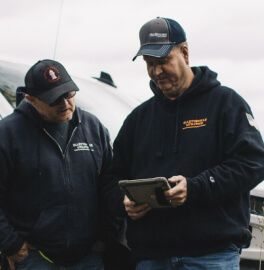
Before the operator leaves, have the newer team member shadow them during actual work. Not for a day, for weeks. The retiring operator talks through decisions in real time. They mark up the documents you created: "This is wrong" or "You forgot the part about when the valve freezes in January."
This is where the real learning happens. Everything up to this point is preparation. The ride-along is where it clicks.
Where to put all of this
You don't need special software for this, but the right tools make it easier to keep up with. Here's what we've seen work:
Google Docs or a typed-up binder: Simple, everyone can access it. Good for written procedures and cheat sheets. Better than a handwritten notebook because anyone can read it.
Video on your phone: Record the operator walking through a procedure. You'll catch things you'd miss in writing, the way they check the gauge, the order they turn the valves.
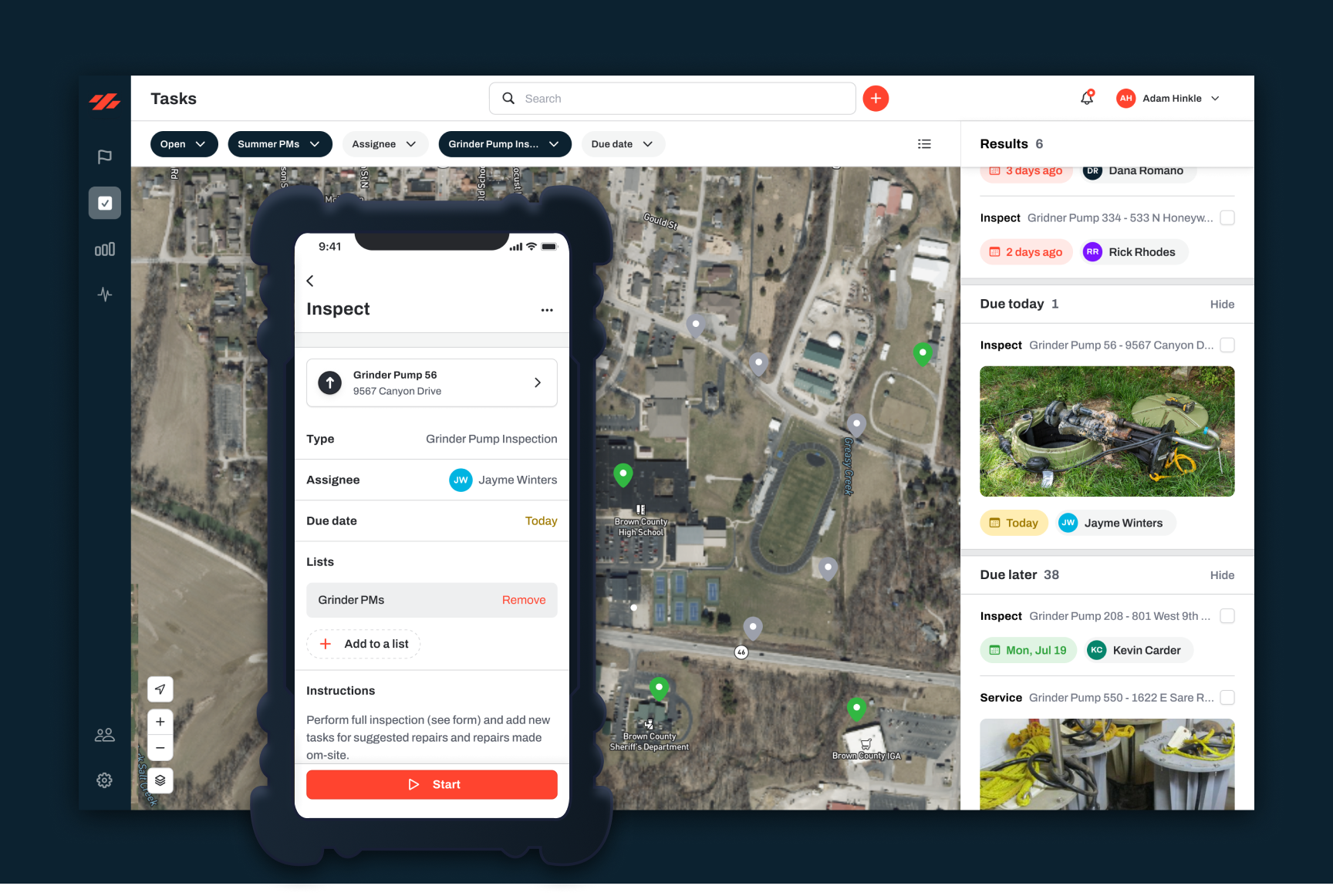
Checklists tied to your assets: If you use software to track your infrastructure, build checklists right into the asset records. When someone opens the pump record, they see "monthly start procedure" right there, not buried in a binder back at the office.
The point: use what your crew will actually look at. A simple system you maintain beats a fancy system you build and ignore.
What happens when you don't do this
You spend the next 18 months answering the same questions over and over. Equipment failures you could have prevented catch you off guard. Your new operator is stuck reacting, fixing what breaks instead of preventing the break. You end up hiring a consultant to tell you what Dale knew for free.
As one utility put it: "Some work was done somewhere at some point in time by somebody." That's what your records look like when knowledge isn't documented. Don't let that be your system.
The silver tsunami isn't coming: it's here. The operators who built these systems are leaving. The question isn't whether you'll lose knowledge. It's how much.
You don't need to wait for a retirement announcement. Pick one of your most experienced staff members. Spend the next few months capturing what they know using the steps above. You'll have a stronger team, less downtime, and the peace of mind that critical knowledge isn't locked in one person's head.
We built Ziptility to be the place where this knowledge lives, tied to the asset, on the map, accessible from a phone in the field. Every work order, every note, every photo is linked to the infrastructure it's about. When the next operator pulls up a pump, they see everything that's ever been done to it. It's utility asset management built for small utilities that don't have GIS departments or IT staff.
What is the silver tsunami in the water utility industry?
It refers to the wave of experienced water and wastewater operators reaching retirement age at the same time. AWWA estimates 30-50% of the utility workforce will retire in the next decade, taking decades of undocumented institutional knowledge with them.
How do you transfer knowledge from a retiring utility operator?
Start before they announce their retirement date. Have them log their daily work against assets on a digital map, every repair, every note, every photo, every workaround. Over a few months, the knowledge that lives in their head becomes a documented record the next person can access.
What kind of knowledge do utilities lose when operators retire?
Four things: how equipment actually runs versus what the manual says, seasonal patterns and warning signs, emergency response protocols and decision rules, and relationship networks, which contractors show up fast, which inspectors to call, which suppliers work with you on terms.
How can small utilities prepare for workforce turnover?
Make knowledge capture part of daily operations, not a special project. When every work order, photo, and field note gets logged against the asset on a map, the institutional knowledge accumulates automatically. The new hire inherits a documented record instead of starting from scratch.
Blake Anderson spent 14 years operating water and wastewater systems before joining Ziptility. He knows what it's like to run a crew of three, manage a thousand valves, and explain infrastructure budgets to a city council.