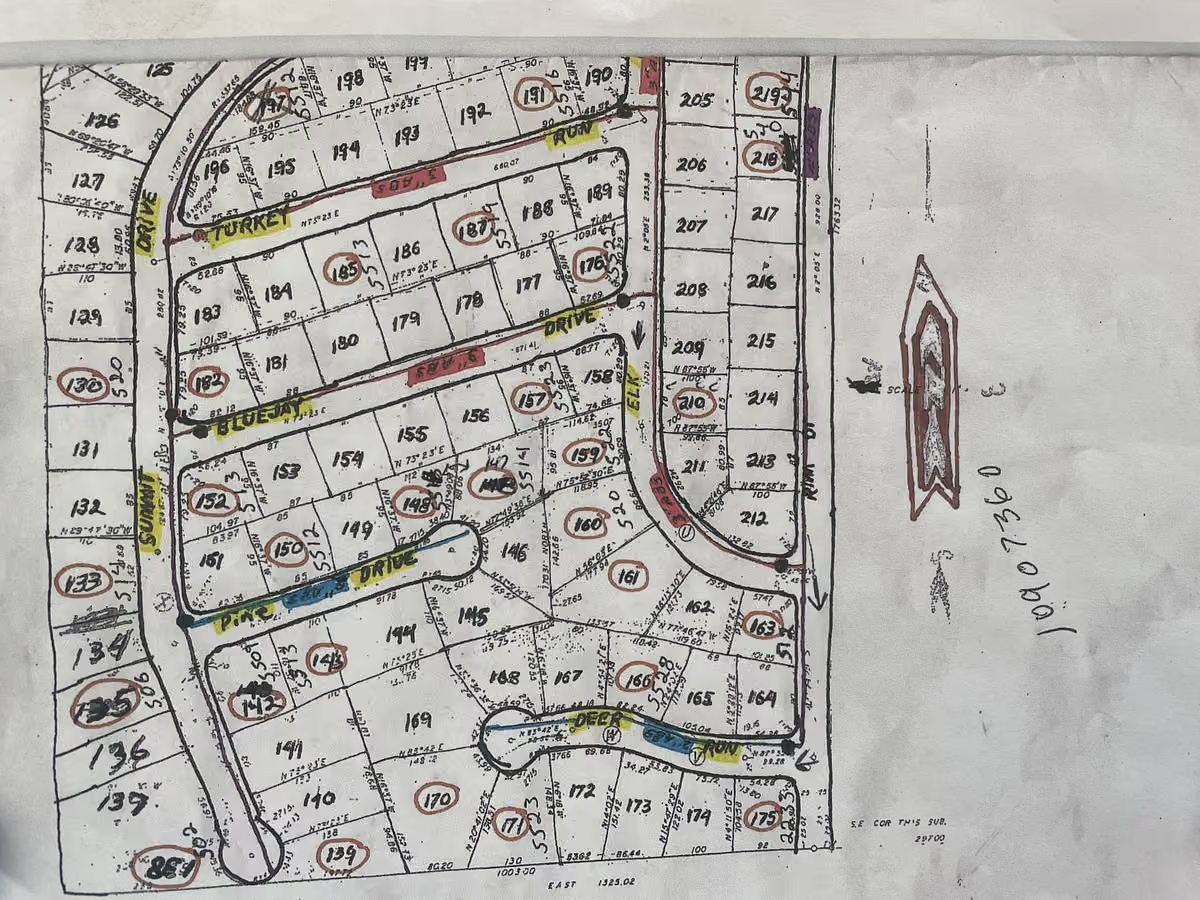
There are two kinds of maps at a water utility.
One was built by an engineer during a project. It was accurate on the day it was drawn. It's been sitting since.
The other gets updated every time someone does their job. Every valve exercised, every meter read, every leak repaired, every photo taken. It all goes on the map, the same day, by the person who was standing there.
The first map gets outdated. The second one gets smarter. And the difference between the two matters most on the worst day your system has.
How fast a static map goes stale
Think about what changes at your system in a single year.
You replace a section of main after a break. The old plans show a 6-inch cast iron line. The new one is 8-inch PVC at a different depth. The map still shows the old line.
You exercise 40 valves. Eight of them are stiff. Two don't close. One is buried under six inches of dirt and asphalt. None of that is on the map.
A curb stop gets replaced. The new one is four feet south of where the old one sat because the contractor had to dodge a gas line. The map still shows the old location.
Your senior operator retires. He knew all of this. The map doesn't.
That's one year. Now multiply it by five. By ten. Every year the map sits untouched, it drifts further from reality. The dots are still there. The lines are still there. But the information that actually matters, condition, history, what's changed, what's buried, what doesn't work, was never on the map in the first place.
An engineering firm can come back and resurvey everything. That's a project. It costs money. It takes months. And the day after they're done, the map starts getting stale again because nobody in the field can update it.
250 days vs. 3 days
Here's the math that should change how you think about this.
Your engineer interacts with your system map maybe 3 days a year. Project-based work. Occasional consultation. Important, but intermittent.
Your field crew interacts with your infrastructure 250 days a year. Every work day, they're touching your system. They are reading, inspecting, repairing, replacing, flushing, exercising. They're generating information about the system with their hands.
In the traditional model, all 250 days of field information disappear. They go into a notebook or a filing cabinet or nowhere at all. The map only reflects the 3 days of engineering information.
Flip that. Give the field crew a way to write to the map while they're doing their regular job. Now the map reflects 250 days of real-world interaction instead of 3.
That's not incremental improvement. That's a completely different kind of data. The engineering data tells you what was designed. The field data tells you what's actually happening. And when those two sources live on the same map, the engineer's work gets better because the baseline data is current.
What a living map looks like after six months
We've seen this play out enough times to know the pattern.
A crew starts using the app. The first week is slow. They're dropping pins on things they run into during their regular work, a hydrant here, a valve there, a meter while they're reading routes. It doesn't look like much.
After a month, the most-used parts of the system have real data on them. Not just locations but work histories. Photos. Condition notes. That valve on Third Street has a note saying it's stiff and a photo showing it's partially buried. The hydrant on Oak has two flow rate entries a year apart and now the pressure dropped. That's a flag.
After three months, the crew is using it without thinking about it. It's just how the work gets done. Log the job, tag the asset, move on. The map fills in as a byproduct of the daily work, not as a separate project.
After six months, something shifts in the organization. The board meeting changes. Instead of the operator walking in and trying to explain from memory what happened this quarter, there's a record. Every work order completed. Every asset serviced. Every dollar spent on what. The board stops asking “what does the crew do all day?” and starts asking “what do we need to budget for next year?”
That shift happens because the map (the operations record) is alive. It's being fed by the people doing the work, every day. And it's producing value not just for the field crew but for the board, for the office, for the state when they call, and for the next person who takes the job.
The retirement test
Here's the clearest way to think about it.
Your most experienced operator gives notice. He's retiring in 60 days. He's been there 22 years. He knows every valve, every quirk, every shortcut, every problem area in the system.
If your map was built by an engineer five years ago and hasn't been updated since, what leaves with him? Everything that matters. The depth of the main on Hackney Street. Which valves don't fully close. Where the water pools after a rain because there's a sag in the line nobody fixed. What got replaced after the freeze. All of it: gone.
If the map has been maintained by the field crew for the last two years, what leaves with him? His experience, his judgment, his instincts, those can't be captured. But every job he logged, every note he left, every photo he took, every asset he flagged, that stays. The new person doesn't start from zero. They start from two years of documented history on every asset the crew has touched.
That's the difference between a map that was smart once and a map that gets smarter every day.
The question to ask
Next time someone tells you your system has GIS, ask this:
When was the last time someone in the field added to it?
If the answer is “they don't,” or “we don't really update it,” or “the engineer handles that”, you don't have a living map. You have a snapshot. And snapshots decay.
The people who know your system best are the people who work on it every day. If they can't write to the map, the map will always be behind. And the person who pays for that gap is the next operator on call at 3 AM who needs information that never made it off a truck notebook.
The map should get smarter every day. If it doesn't, it's just a picture.
Want to see a map that gets smarter every day? Book a demo, see how it works, or check what it costs for your system.