You know where your data is right now? It's everywhere.
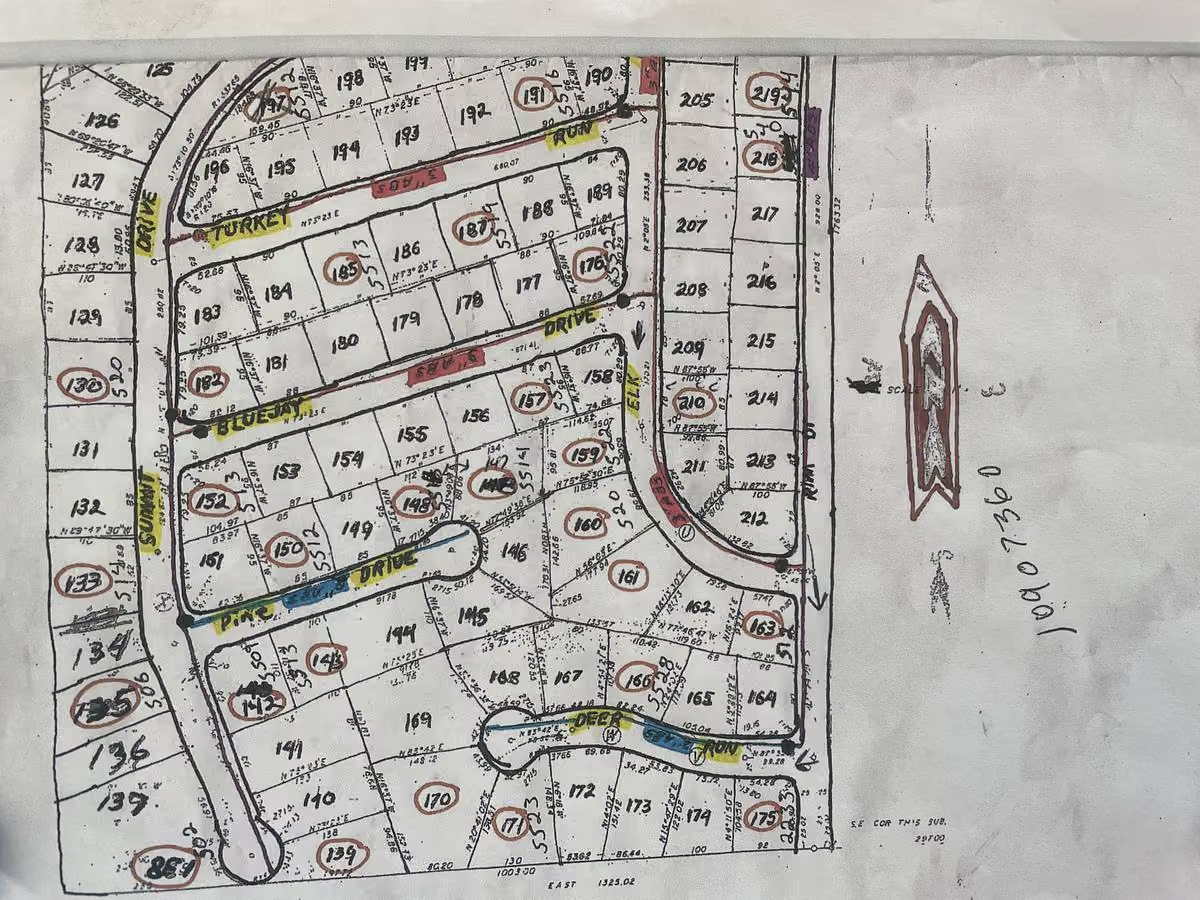
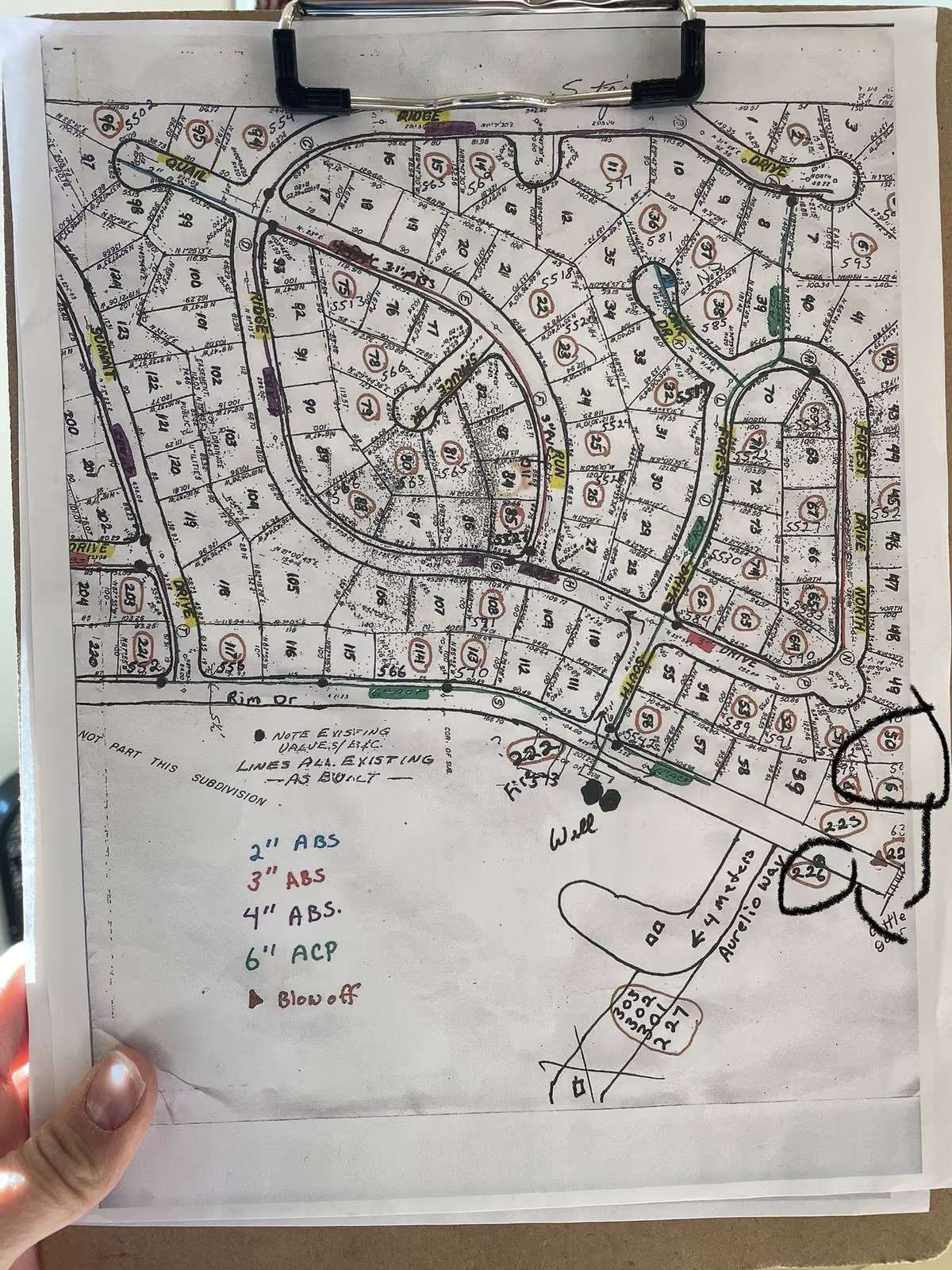
The water main map is in a binder in the back office. The valve exercise records are in a spreadsheet on Karen's computer. The work orders are on carbon copy forms in a filing cabinet, or maybe in the truck. The lift station maintenance logs are in a separate binder. The meter reads are in the billing system. The parts inventory is on a clipboard in the warehouse, if anyone's been updating it. And the most important information about your system, where the tricky valves are, which mains have been patched three times, which collection system lines back up after heavy rain. That's in Gary's head. And Gary's retiring in 18 months.
This isn't a failure. It's just how small utilities have operated for decades. Water utility data management has always been "use whatever tool was available at the time." And it works well enough, until it doesn't.
Six places your data lives right now
1. Paper maps and binders
Most small utilities still rely on paper maps as their main source of truth for both water and sewer systems. Maybe they were drawn up by the engineer who designed the original system. Maybe someone updated them with a marker after the last main break. They work until they get lost, damaged, or the person who maintained them leaves. One operator we talked to at a utility that eventually switched to Ziptility described it well: they went "from paper maps and guesswork to having everything at our fingertips."
2. Spreadsheets
Valve exercise logs. Hydrant flush schedules. Inspection records. Meter inventories. Each one in a separate Excel file, usually on one person's computer or a shared drive that's three folders deep. No connection between them and no link to the map.
3. The billing system
Your billing software knows every meter and every customer. But it doesn't know anything about the mains, valves, hydrants, lift stations, or collection system pipes serving those customers. It's a financial system for one narrow slice of your infrastructure.
4. Filing cabinets
Work orders, inspection forms, contractor invoices, as-builts from twenty years ago. They're in the cabinet. They're technically accessible. But finding the repair history for a specific hydrant means flipping through paper for twenty minutes, and that's if you know which drawer to start in.
5. The warehouse clipboard
How many 6-inch repair sleeves do you have left? What did you use on that emergency repair last Tuesday? Most small utilities track their parts inventory on paper, a clipboard, a whiteboard, or a spreadsheet someone updates when they remember. When your crew grabs parts for a job, the counts don't update until someone walks back in and writes it down. Meanwhile, nobody knows what to reorder until something's already out of stock.
6. Someone's head
This is the biggest one. Your most experienced operators carry decades of institutional knowledge that's never been written down. Where the unmarked valves are. Which mains are undersized. Which lift station acts up when the groundwater's high. Where the ground shifts after heavy rain. That knowledge walks out the door every time someone retires, gets hurt, or takes another job. As one superintendent in Winslow, Indiana told us: "Before Ziptility, when someone retired, all that knowledge walked out the door."
What scattered data actually costs you
This isn't just an inconvenience. It has real financial consequences that show up in ways most utilities don't track.
Emergency repairs that didn't have to be emergencies
When you can't see the pattern (three repairs on the same section of main in two years) you keep patching until it fails catastrophically. Emergency repairs cost three to five times more than planned replacements. The data was there to see it coming. It just wasn't in one place.
If you'd had the maintenance cost history, the condition scores, and the criticality rating all tied to that specific asset, you'd have known it was time to replace it before it became a midnight emergency.
Lost time in the field
How much time does your crew spend driving back to the office to look at a map? Calling in to ask where a valve is? Searching through binders for the last lift station service date? Checking the warehouse clipboard to see if you've got the right fittings before driving to the supply house? One operator at a utility that eventually left Ziptility for another product told us exactly why they'd been struggling with their old process: "I found myself writing stuff down and going back in the office." That back-and-forth eats hours every week, hours your crew could spend doing actual work.
Budget requests that don't get funded
When the board asks why you need $150,000 for capital improvements, "because things are getting old" isn't compelling. But if your data is scattered across six different places, you can't pull the specific asset histories, condition ratings, maintenance costs, and replacement estimates that make the case. The money was available. The data wasn't.
Knowledge that disappears
The water industry calls it the "silver tsunami": a wave of experienced operators retiring over the next decade. When your most valuable system knowledge lives in someone's head and they leave, it's gone. You can't pass down what you never captured. Every valve location, every quirk of the system, every lesson from a past failure, it all disappears with them.
Audit and compliance headaches
When the state asks for maintenance records, inspection logs, or asset inventories, how long does it take you to pull that together? If the answer is days or weeks, that's a sign your data is too spread out to be useful.
What it looks like when everything's in one place
The fix isn't complicated. It's getting your maps, asset records, work orders, inventory, and inspection data (for both water and wastewater) into one system that your whole crew can access from the office, the truck, or the field.
When everything's in one place:
Your crew pulls up the map on their phone and sees every asset with its full history, past work orders, condition ratings, photos, notes. No calling the office. No binder in the truck. When they finish a repair, they log it on the spot, the labor hours, the parts they used from inventory, the equipment hours. That record is immediately available to everyone, and the inventory counts update automatically so the office knows what to reorder.
When they complete a valve exercise or hydrant flush, they update the condition and risk data as part of closing out the task. Over time, every asset in the system gets scored, not from a one-time consultant assessment, but from the people who actually touch the infrastructure every day.
The maintenance costs (labor, materials, equipment) accumulate on every asset. The criticality scores tell you what needs attention first. The replacement costs and remaining useful life are right there. When budget season comes, you can walk into a board meeting with real numbers instead of guesswork.
And when Gary retires? Everything he knows is already in the system. Every valve he exercised, every lift station he inspected, every note he left, every condition score he updated. The new person opens the app and it's all there on the map. That knowledge didn't walk out the door. It's in the system because Gary put it there while doing his job.
This isn't about buying more software
If you're running a small system, the last thing you need is another tool that fights your crew for adoption. You need something they'll actually pick up and use, because if they don't use it, the data never gets collected, and you're right back to the six places.
That's the design principle behind Ziptility. One app that connects your maps, your asset records, your work orders, your inventory, and your inspection data, water and wastewater, all in the same place. It runs on the phones your crew already carries. Unlimited users on every plan, because the more people on it, the faster those six scattered data sources become one shared record.
The reason it works isn't the features. It's that your crew prefers it to paper. They're not filling out carbon copies or driving back to the office to check a binder. They open the app, see what they need, log their work, and move on. The cost tracking, the condition scores, the inventory counts, it all fills in as a natural part of their day.
You don't have to migrate everything overnight. Start with your map. Add your assets. Let your crew start logging work. Within weeks, you'll have more useful data in one place than you've had in six places for years.
Want to see what it looks like when all your data is in one place? Request a free demo →