The setup
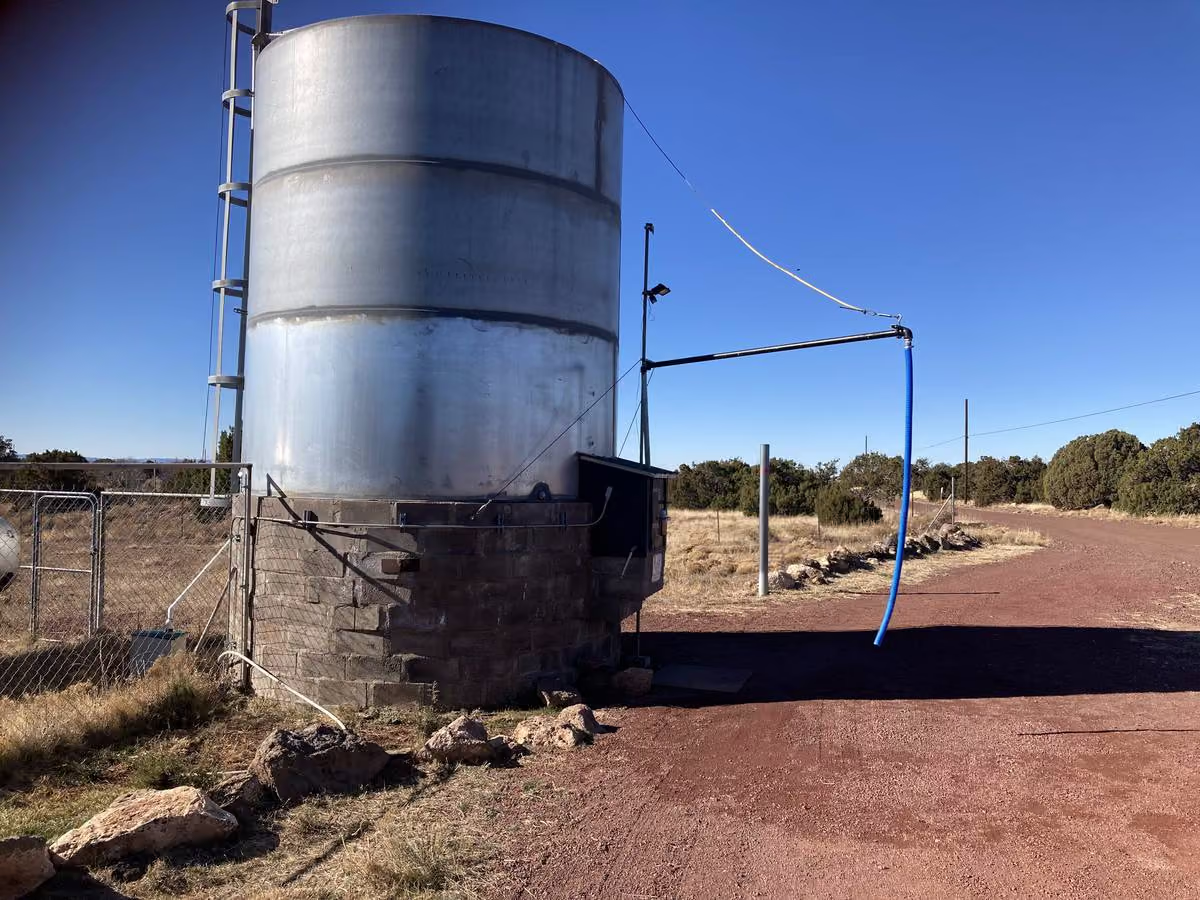
They don't have an operator on payroll. They don't have an office or a maintenance crew. They contract with a company that manages several small systems across the region. One guy drives out, turns the valves, reads the meters, and keeps the water running.
Between the contract operator and the board member managing the account, those two people are the entire operation.
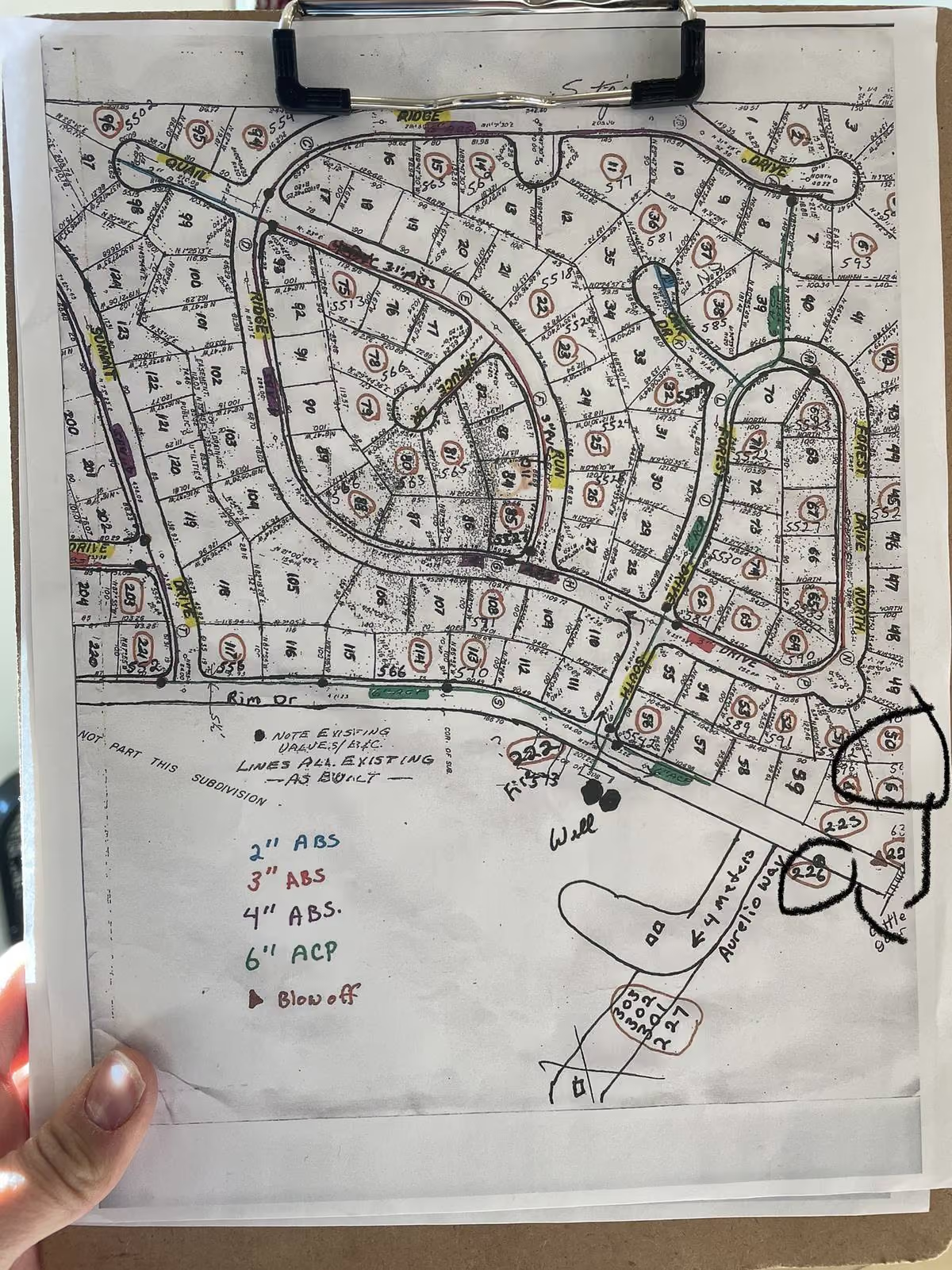
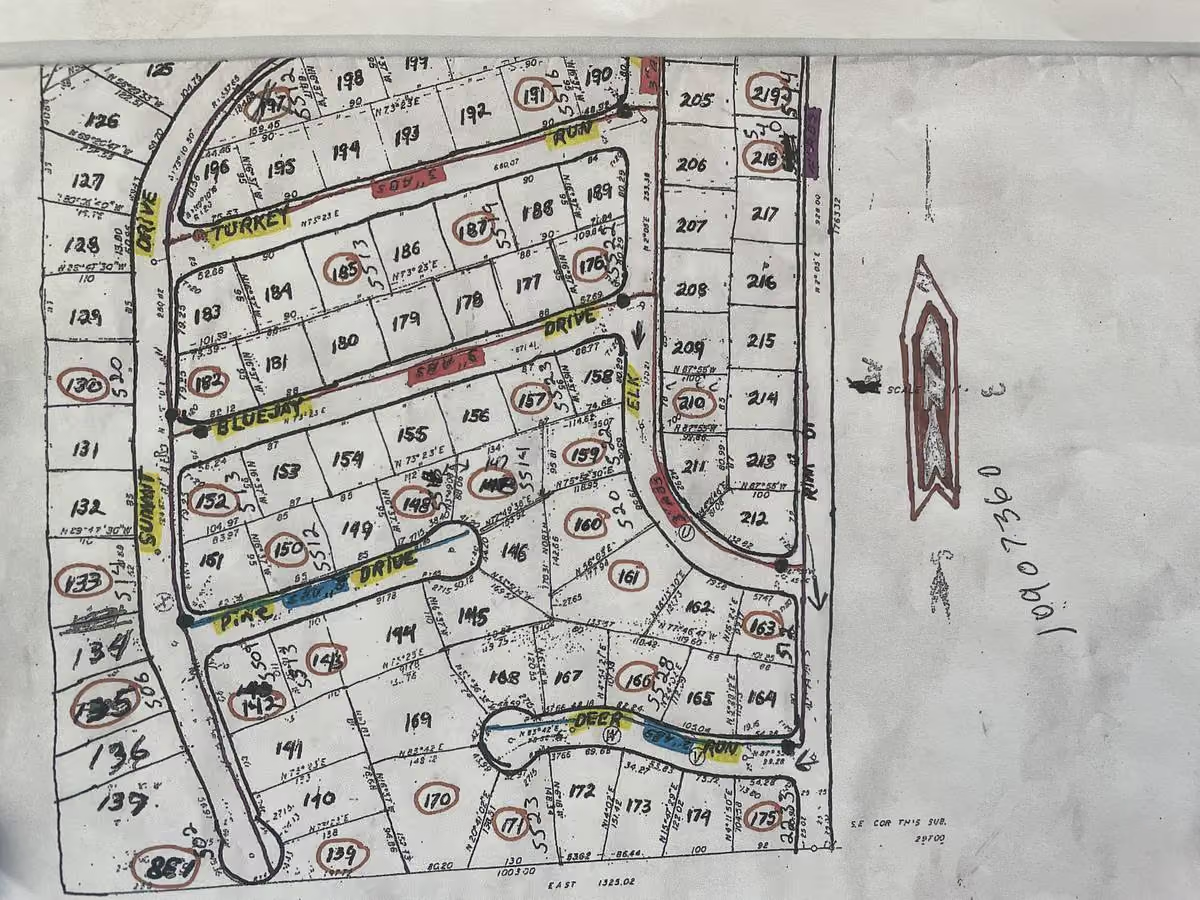
Their situation before was the same one most small systems live with: aging infrastructure, no clear picture of what's in the ground, no way to prioritize what to replace next, and a board that needed real numbers when it came time to set the annual budget. Before, that meant guessing. Or asking the operator what he thought and hoping the board trusted his judgment enough to fund it.
What changed
After they got set up with Ziptility, the board member said something worth reading carefully:
"Ziptility's Asset Management Plan helped us build our 2023 budget and gave the Board of Directors a clear path of what needs repaired and in what order."
A 50-connection HOA (no GIS background, no IT person, no engineering staff) built a capital improvement plan and a budget justification their board could actually use. Not because they hired a consultant. Because the tool let them do it themselves, one work order at a time, as the work happened.
That's worth thinking about in the context of what RCAP and EPA keep telling small systems. The RCAP Asset Management Guide lays out five core components of asset management: asset inventory, level of service goals, identifying critical assets, lifecycle costing, and a long-term funding strategy. That sounds like something that requires an engineering firm and a year-long project. This system did it with a contract operator, a phone, and a board member who cared enough to pay attention.
What the contract operator sees
The contract operator manages multiple small systems. Before, that meant different records in different places, different paper maps, different filing cabinets, different binders in different trucks. Every system was its own silo of information, and the only thing connecting them was his memory.
After, every system is in one place. Same map interface, same work orders, same asset records. When he drives from one system to the next, the records travel with him. When he logs a valve repair at one site, the history is there for whoever looks at it next, even if that's a different operator five years from now.
Here's how he put it: "Having a way to easily manage and prioritize asset maintenance, repairs and replacement projects is invaluable for utilities of all sizes."
That phrase ("of all sizes") is worth sitting with. A contract operator managing five or six tiny systems doesn't have time for five different record-keeping methods. He needs one way to do it that works the same whether the system is 50 connections or 2,000. If the tool can't work at 50, it's too complicated for the field.
What the board got
Here's the part that matters if you've ever had to justify spending to a board.
Before, the budget conversation was an informed guess at best. What needs replacing? What should we spend? The answers lived in the operator's experience and whatever paper records existed. The board had to trust his gut, and he had to carry the burden of being the only person who knew.
After, the board had an asset management plan with condition assessments and a capital improvement schedule. They could see what was in the ground, what shape it was in, and what needed attention first. When they needed to justify a rate increase or apply for funding, they had documentation, not a story.
RCAP's Board Guide confirms this is a universal challenge. Most small-system boards are volunteers making decisions without financial training. They want to do right by their community, but they can't approve what they can't see. The board member gave his board something to see. That changed the conversation from "do we trust the operator?" to "here's what the data says we need." Both questions got the same answer, but one of them builds a system that lasts beyond any single person.
Why 50 connections matters
EPA data shows that infrastructure costs for small systems run about $3,300 per household, compared to $790 for large systems. That's four times the cost per connection. Every dollar matters more at a small system. Every deferred repair compounds faster. Every rate increase is harder to justify without documentation.
The standard assumption in the water industry is that bigger systems are better managed because they have more resources. This system flipped that. With 50 connections, a contract operator, and a board member willing to use a simple tool, they demonstrated all three legs of what EPA calls TMF capacity: technical, managerial, and financial.
They know what's in the ground. They track the work. They plan the budget. That's more than a lot of 5,000-connection systems can say.
Getting started
They didn't do a six-month rollout. There was no RFP. No IT review. No committee. The board member and the operator sat down, brought what they had, and started building the record.
If you run a 500-connection system or a 2,000-connection system and you've been telling yourself you're too small for this, this HOA had 50 connections and no full-time staff. They didn't wait until they were bigger. They started where they were, with what they had, and built something their board uses every budget cycle.
Your system can do the same thing.
If a 50-connection system can do it, yours can too. Book a demo, see how it works, or check what it costs for your system.