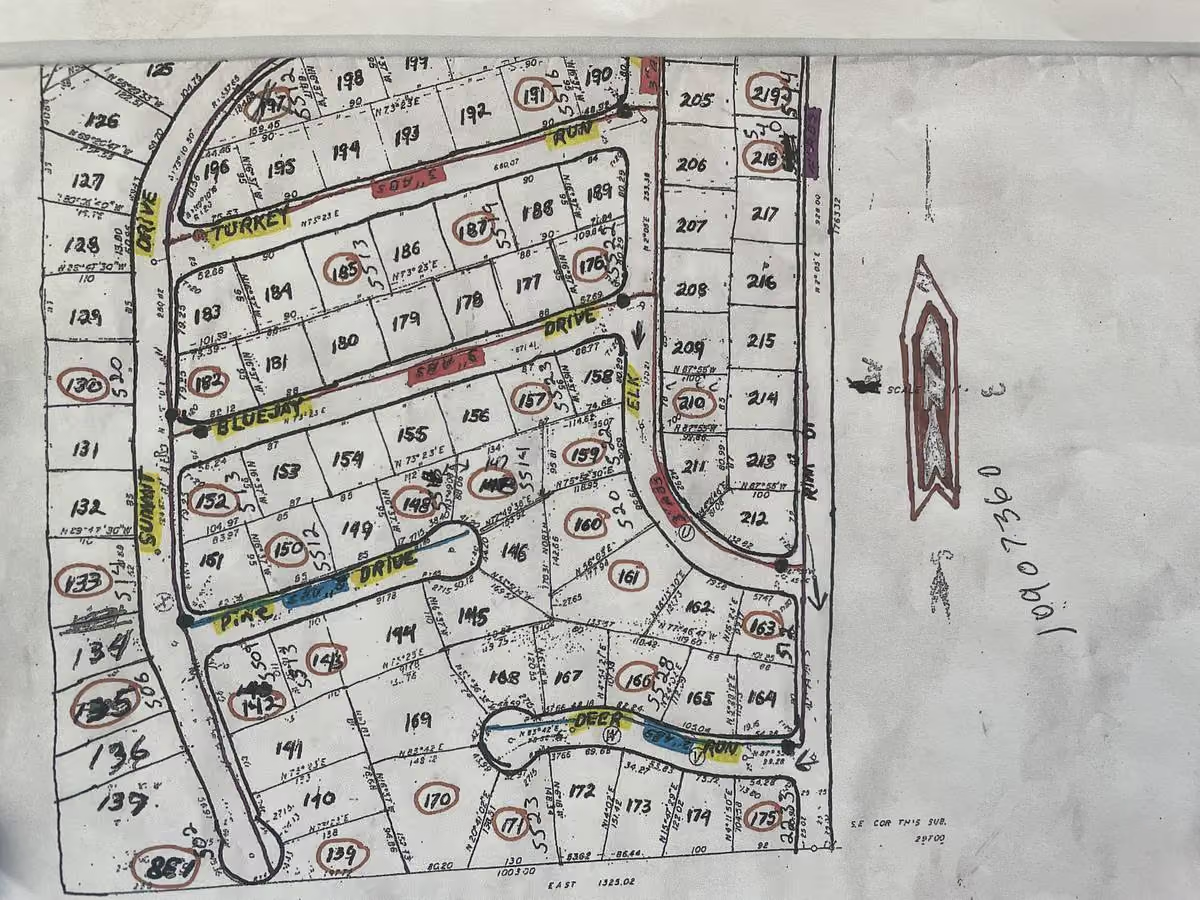
There's a filing cabinet in the back of every small utility office in America. Inside it, maybe, are work orders from the last few years, valve records, meter replacement logs if someone wrote them down, and a set of paper maps that may or may not match what's actually in the ground today.
If that sounds like your office, you're not behind. There are 44,000 small community water systems in this country, and most of them run the same way. Paper, memory, and the one or two people who've been there long enough to know where things are.
That works fine until it doesn't. And at a small system, the moment it stops working tends to hit at the worst time: the 2 AM call where nobody knows which valve to close, the retirement where twenty years of knowledge walks out the door, the state audit where you need records you can't find.
You already know this. The question isn't whether paper has limits. It's what getting off paper actually looks like when you're two people and a part-time office person, and you don't have time for a project.
You start with whatever you've got
One of our customers, a small system with three guys, told us something during his first week that stuck.
"I could just do this as I'm reading meters, half the town would be mapped just that fast."
He wasn't in a training class. He wasn't at a desk. He was walking his normal meter route and dropping pins on the map as he went. By the time he finished his rounds, he'd built half his infrastructure on a digital map that his whole crew could see from their phones.
That's what it actually looks like. Not a six-month rollout. Not an RFP. Not hiring a GIS consultant. You don't need clean data. You don't need an engineering firm. You need to start.
So you take your paper map, the one with the hand-drawn lines and the highlighted valves, and you use it as a reference. Every valve you visit gets a pin. Every hydrant you flush gets a photo. Every meter you read gets logged to a spot on the map. After a week of doing your regular job, you've got something the filing cabinet never gave you: a map that travels with the crew and updates as you work.
It's messy at first. That's fine. After a month it's less messy. After three months you've got a real record.
What changes first
The thing most crews notice first isn't the map. It's the work orders.
Every job that gets done, every photo, every note, every valve someone turns, files itself against that asset automatically. Nobody drives back to the office to write something down. Nobody moves a sticky note from the truck dash to a filing cabinet. You build the record while the work gets done.
Even a small crew logging ten work orders a week will have a full year of documented maintenance history by next spring. That's something the state inspector can look at. That's something you can hand the board.
An operator in Floyds Knobs, Indiana (one of our longest-running customers, going on seven years now) said this was the thing that changed his job the most. His board can actually see what the crew does all year. Before, the board meeting was "what happened?" and the answer was whatever he could remember. Now it's a report. The conversation shifted from defending the crew's existence to planning next year's budget.
Think about what that means when you're the one person carrying the operation. You stop having to justify yourself. The work is documented. When you need money for a capital project, you've got the history. When the board asks what happened between meetings, you've got a record instead of a story told from memory.
What the first month looks like
Day one. You sit down with us for about 45 minutes. You bring whatever you have, a paper map, a spreadsheet, shape files if your engineering firm gave you some. By the end, your system is on a map and the app is on your phone.
First week. You start tagging assets you run into during your regular work. Reading meters? Drop a pin. Exercising a valve? Log it. No special time set aside. You build the map while you do your job.
First month. Work orders are being tracked against specific assets. Photos attached. Notes logged. When someone asks "what happened at that valve on 3rd Street?" you pull it up instead of trying to remember.
By month three. You've got a real maintenance history for your most-touched assets. A map your whole crew uses daily. And a record that survives even when people don't.
That last part is the one that matters most at a small system. RCAP's data shows considerable turnover in rural community leadership, not just operators retiring, but board members cycling, part-time staff coming and going, contract operators changing. What you document today protects the next person. And the person after that.
Three things that are different after
Here's what operators at small systems tell us after they've been on for a while.
The new person gets up to speed faster. Instead of six months following the senior guy around learning where everything is, the new hire opens the app. Every note, photo, and work order the crew has logged is there. He's not starting from zero. He's starting from what everybody who came before him recorded.
Emergency calls get simpler. Main break at midnight. The operator on call pulls up the map, sees the shutoff valve, sees the last time it was serviced, sees a photo someone took of the access point. He's not calling anyone at 2 AM asking "where's the valve on Oak Street?" He's already driving to it.
The board meeting changes. Instead of trying to remember what happened last quarter, you walk in with it. Valve exercisings, hydrant flushings, meter reads, leak repairs. Over a few meetings, the board shifts from asking "what does the crew do all day?" to "what do we need to budget for next year?" That's a different kind of meeting, and it happens because the numbers are there instead of a verbal report.
The filing cabinet isn't the problem
Look, the paper maps and the filing cabinet got you here. They work. They're real. No one's asking you to throw them away.
But think about what they can't do. They can't go with your crew to the field. They can't survive a retirement without someone spending weeks organizing them for the next person. They can't produce a report when the state calls. And they definitely can't tell you which of your valves is 35 years old and due for replacement. RCAP's asset lifecycle data puts gate valves at 35-40 years, meters at 10-15, hydrants at 50-60. If you don't know when they went in, you can't know when they're due. The filing cabinet doesn't track time.
A small system in Arizona said it well: they needed something that didn't require a PhD to use. That's the bar. Not more technology. Just your records on a map, on your phone, where your crew can get to them.
If you've got assets in the ground and people who maintain them, you're big enough. If a system with 50 connections and a contract operator can do it (and they did) a system your size can too.
Ready to get your records off paper? Book a demo, see how it works, or check what it costs for your system.