Heber DWID: what one tank was doing, and what the funded project builds
Written for Audubon Southwest's White Mountains Water Projects Tour, August 28, 2026. The numbers are as of that day.
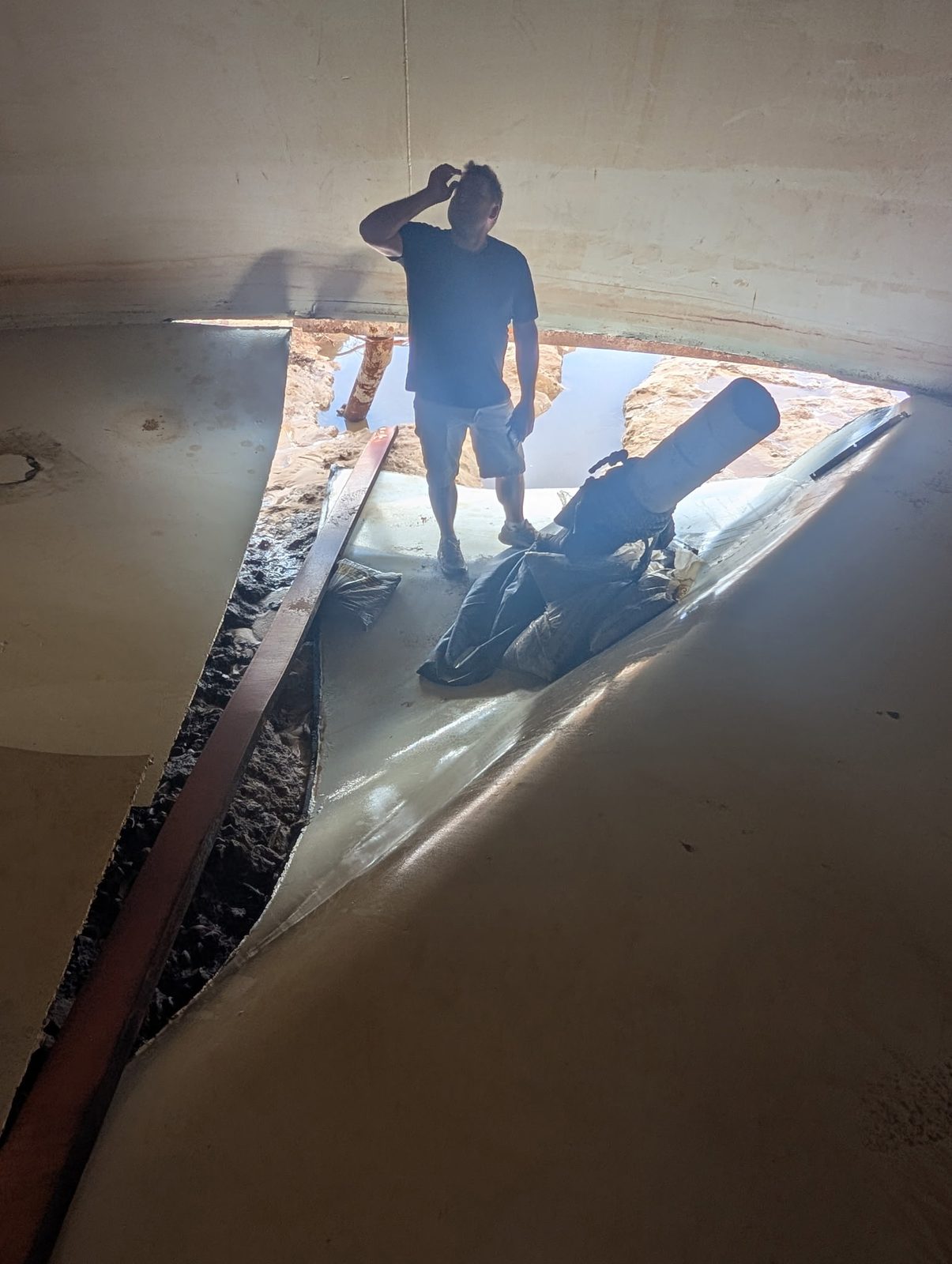
You did not have to be on the bus. Two days before the tour, the only storage tank at Heber DWID came apart. This page was written for people standing in front of it, and it reads fine without that, as long as you know one thing going in: the district already had the money for a second tank. It had not built it yet.
Status, August 28, 2026: cause not determined; an engineer's report is pending. Nothing here is a statement by Heber DWID.
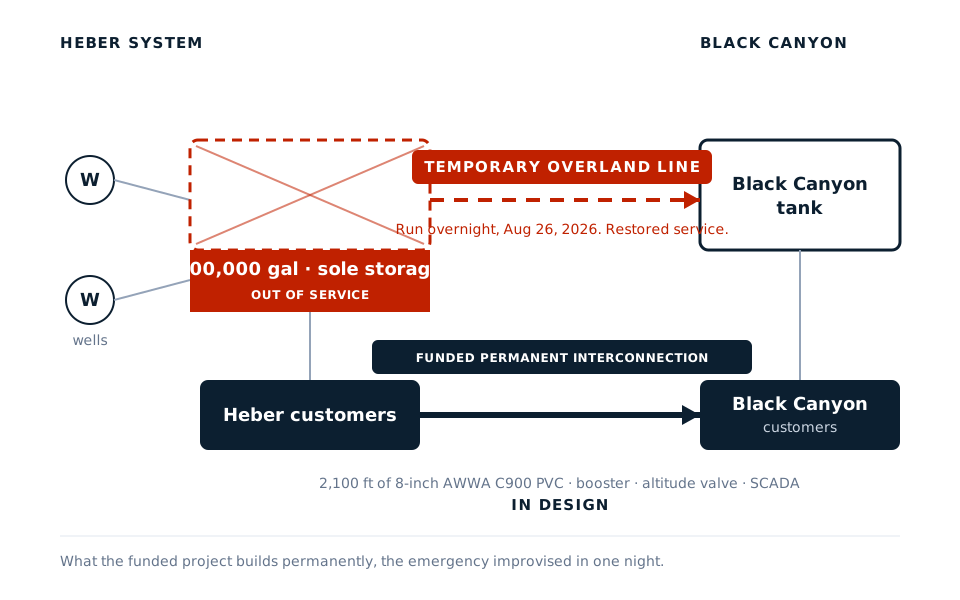
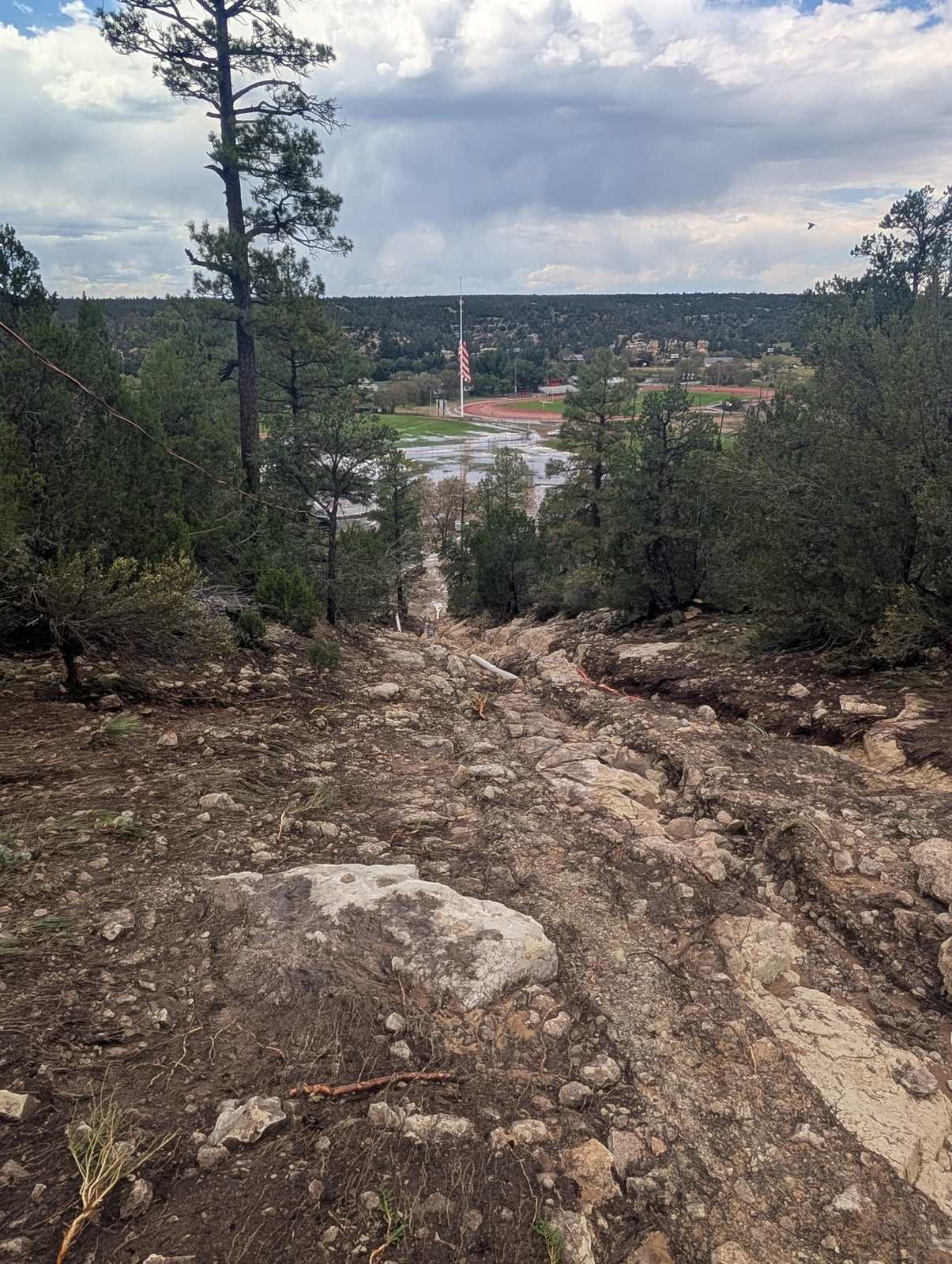
Heber DWID had already secured nearly $4 million from WIFA to interconnect two water systems and add a second storage tank. That project is in design. On August 26, 2026, the district's only storage tank collapsed. Overnight, an operator ran a temporary line to the Black Canyon tank and put the town back in water. It was a hand-built preview of the funded project.
Why it is on the tour
The agenda for today was written before August 26. This stop was added after the tank came apart, because it is difficult to explain rural water redundancy in the abstract and very easy to explain it standing next to a tank that is no longer there.
In design. Project status on the day the tank came apart.
Sources: WIFA WSDRF budget cost estimates, September 2024, WSD-038-2025 and WSD-039-2025; Heber DWID kick-off meeting reference sheet (awarded total).
What the funding actually builds
Heber DWID is in Navajo County, Arizona. Both awards come from the WSDRF, Arizona's own fund, separate from the federal SRF. How that fund works, and where it stops, is on the Arizona funding page.
Heber DWID Tank and Modernization. PWS AZ0409014.
325 connections, about 840 people (EPA SDWIS). Awarded $2,000,000, the WSDRF grant cap.
- A new 300,000-gallon welded steel storage tank
- Sandblast and recoat of the existing tower tank
- Access road upgrade to the tank site
- System mapping
- Remote monitoring and SCADA on the wells and the tanks
Black Canyon Consolidation. PWS AZ0409343.
40 connections, about 100 people (EPA SDWIS). Awarded $1,997,106.
- 2,100 feet of 8-inch C-900 interconnection along Hill Road
- Rock trenching and road surface replacement
- Hill booster station and pump house
- Altitude valve, electric rack and antennas
- SCADA system and communications
- Rehabilitation and coating of the existing Black Canyon tank
How it unfolded
The money came first. The tank did not wait for it.
Four things the tour could not answer yet
"The funded project was already about redundancy. The emergency did not invent the need. It showed what that need looks like when the old system loses its only storage point."
Blake Anderson, Mogollon Water Management
- Cause of failure.
- Whether the tank can return to service.
- Emergency procurement of the already-scoped controls.
- Revised construction schedule.
Who wrote this, and why it is on ziptility.com
Blake Anderson founded Mogollon Water Management, a water utility operator in Arizona. Under agreements with each district's elected board, Mogollon runs the day-to-day operation of the Heber DWID and Pinedale Estates DWID systems. Ziptility acquired Mogollon in April 2025; Mogollon runs as its own brand with its own team. Heber DWID uses Ziptility's software. Blake developed and teaches ADEQ's management training track for small-system boards and managers, holds Arizona's Grade 4 treatment and distribution certifications, and sits on WIFA's Federal Program Committee as a small-system representative. Nothing on this page speaks for WIFA or for either district; each district's own notices are on its own website. Every figure here is traceable to the sources below.
Sources
Every number on this page comes from one of these. Estimates are marked where they appear.
- WIFA Water Supply Development Revolving Fund applications and budget cost estimates, WSD-038-2025 (agreement 941016-25) and WSD-039-2025 (agreement 941015-25), September 2024.
- Heber DWID kick-off meeting reference sheet (awarded total).
- White Mountains Water Projects Tour agenda, Audubon Southwest, August 27, 2026.
- EPA Envirofacts SDWIS, public water systems AZ0409014 and AZ0409343 (connection and population counts).
- Heber DWID, the district's own notices.
- KPNX/12News, August 27, 2026, report on the tank failure.
- Washington State Department of Health, Water System Design Manual: the storage layer definitions behind "four layers of storage and one control job".
Operating conditions after August 26, 2026 are the district's account as of August 28, 2026. Cause of failure is not determined; an engineer's report is pending.
Corrections: blake@mogollonwater.com.
The sheet as handed out on August 28, 2026 is on the tour page with the other four. Where this page and the sheet differ, the page is current.