Asset management: know what you've got in the ground, what's been done to it, what condition it's in, and how much it costs. Then prove it to your board.
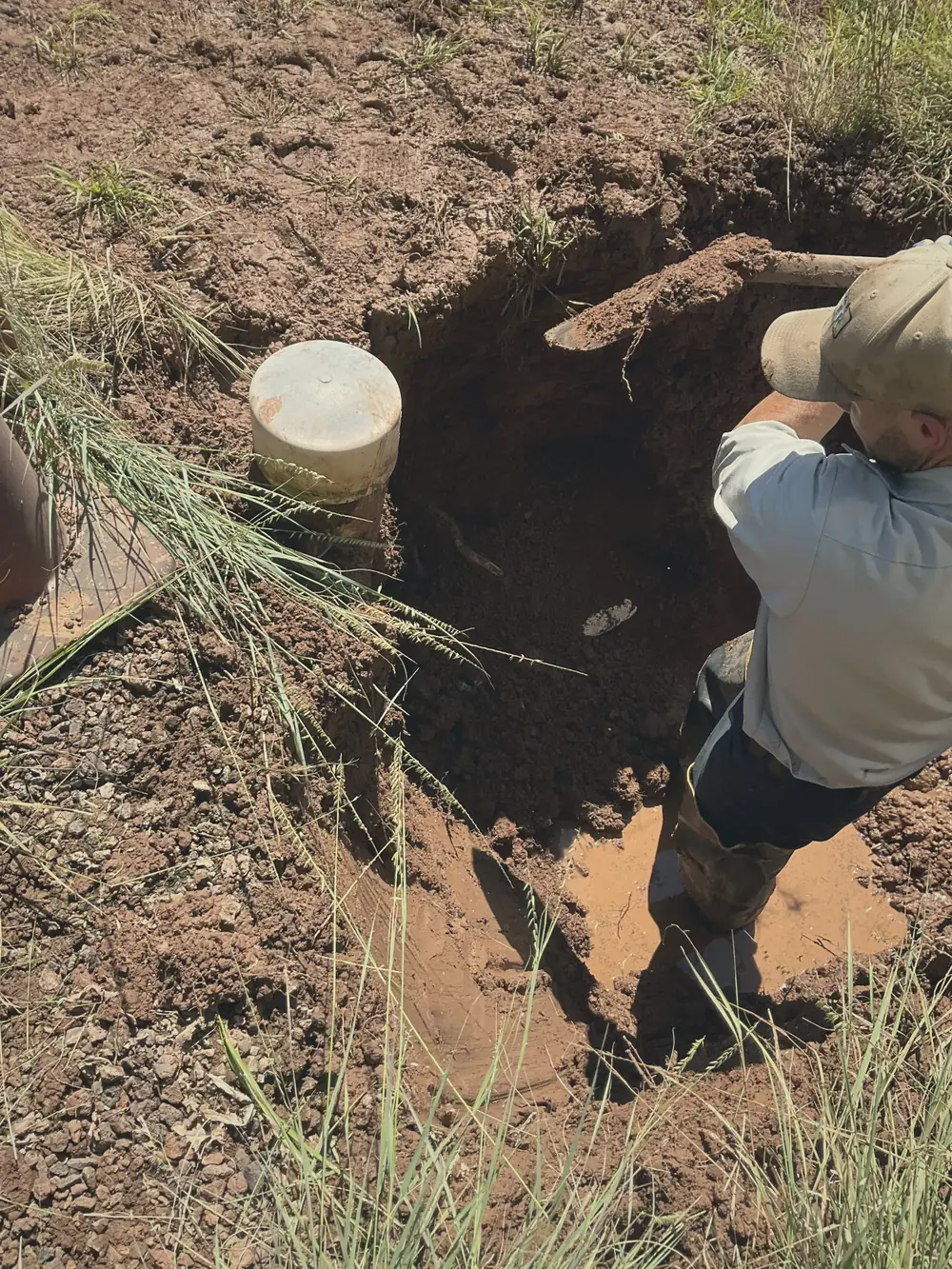
What does water utility asset management software actually do for a small system?
It takes the system that lives on a roll of paper maps, in an engineer's binder, and in your head, and puts it in one record your whole crew can pull up on a phone.
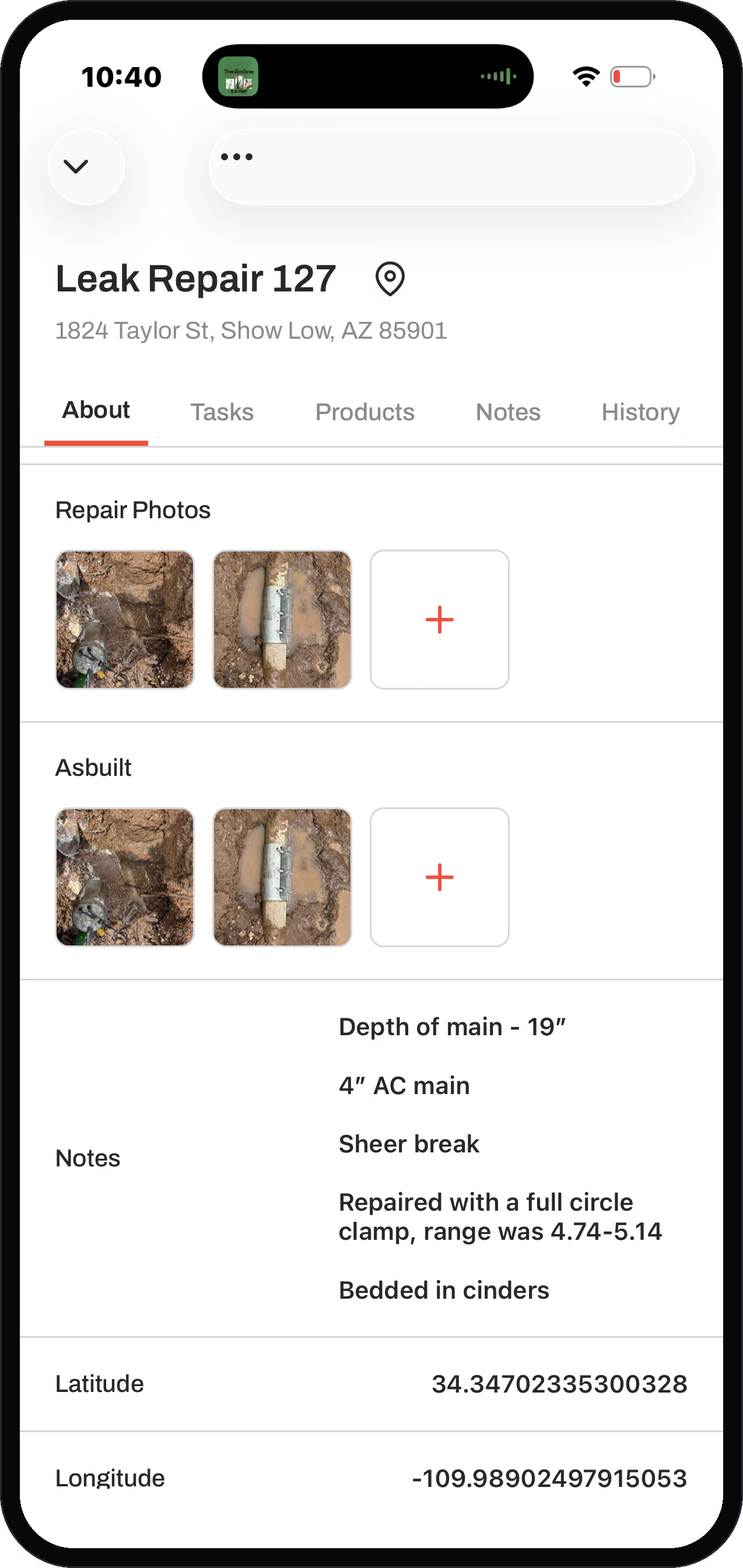
Every main, valve, hydrant, meter, well, lift station, and manhole is a point or a line you can tap. Tap one and you get its whole story: when it went in, its size and material, every repair and inspection, and who touched it last.
The difference from a plain map is that the record stays current on its own. The work rides on the asset. When your operator fixes a valve, he fixes it on the valve, and the record picks it up right there. Nobody has to remember to update a second system. And you stop being the only place the truth is stored. When your best operator retires, the system stops walking out the door with him, because it is already on the record.
That covers the assets a small water or wastewater system actually runs:
Distribution
mains, service lines, curb stops, valves, hydrants, meters
Sources and storage
wells, pumps, booster stations, storage tanks
Wastewater
gravity mains, force mains, manholes, lift stations, grinder pumps
Events you need on the record but that are not rate-base assets
main breaks, SSOs, sewer backups
How do you get the field crew to actually use it?
The hard part was never the map.
It's getting the field to use it. They run it off the phone they already carry. That is the difference between a record that stays alive and an expensive map that dies.
Dead zones do not stop the work. The job still logs on the phone and syncs when the truck gets bars back.
Worried this is another thing you buy, half roll out, and abandon? That is the failure we are built against. It builds itself from work the crew is already doing. It works out of the box, and you can customize it from there. Setup is on us, not a ticket queue.
You already have enough projects.
Do I need a GIS team or a full-time expert to run it?
No. You already know your system.
The grunt work of getting it on the map and keeping it there is what the software does, so the people you already have can run it.
And if you do have a GIS person, this takes the toil off their plate. The field data collects itself from the crew's daily work, so their day goes back to the judgment work only they can do, instead of chasing down paper tickets to key in. One New England city running an enterprise system for years is using Ziptility to finally get the field crew feeding the record their GIS staff maintain.
Getting started does not need clean data either. Paper maps, an old shapefile, a spreadsheet of meters, whatever exists: we import it, and the map fills in as your crew works. Nobody starts clean in this line of work. The point is to start now and get better every week.
What does each asset actually cost you to run?
You finally find out.
When a job closes on an asset, three costs roll up onto it: the parts the crew pulled, the equipment they ran, and their time.
A simple example. Say your operator is billed at $50 an hour all in, the service truck runs $75 an hour, and the repair took two fittings. That main break stops being "some parts and a day." It is a number. Do that across every asset and you can see what each pipe, pump, and valve is really costing you to keep alive.
That is the number that builds an honest capital plan, and it is the number that backs your next rate increase when the board asks why. (Rates shown are illustrative; the operator sets their own.)
Chasing the full money story? Financial tracking turns this cost record into rate cases and funding applications.
What happens to the engineer's binder?
The binder did its job. You just should not have to pay for it again.
An engineer's asset management plan typically runs $30,000 to $60,000, gets redone every few years, and is a snapshot: right the day it ships, wrong the day after. Most of what is in it is your own data, formatted nicely and shelved. Keeping the record yourself costs a few thousand a year, and it is current all the time. When you need a formal plan for a funding application, you hand your engineer clean, current data and skip the fee for re-gathering it.
Salt Creek rebuilt their whole asset management plan this way with their engineering firm and now keeps it as a living document instead of a binder. One utility skipped a $28,000 drone flyover because the record their crew had built already answered the question the flyover was for.
Questions operators ask
What is the best asset management software for a small water utility?
The one your crew will actually keep current from the field. For a small system that means a map-first app with no per-seat fee, simple enough to run yourself, not an enterprise system built for a city.
How much does an asset management plan cost?
An engineer's plan commonly runs $30,000 to $60,000 and is redone every few years. Keeping the record live yourself runs a few thousand a year and stays current.
Can I import my existing paper maps or shapefiles?
Yes. You start with what you have, including bulk shapefiles, and the map fills in as your crew works.
Do I need a GIS background to use it?
No. It is built to be run by the crew you already have, from the phone they already carry. If you do have GIS staff, it feeds them clean field data and ends the paper-ticket chase.
What is the difference between asset management and a work order system?
Asset management is the record (what you own, its condition, its cost). Work orders are the doing (assigning and completing the work). In Ziptility they are the same system, so the work updates the record automatically.
Keep reading
More on knowing what you own
Six pieces that go further than a product page can, written for the operator who already suspects the records are drifting.
The retiring operator problem
What walks out the door when the person who knows the system finally retires.
Read how to keep what your team knowsWhy the smallest utilities have the most to lose
A 300-connection system often runs on one person's memory. That is the whole exposure.
Read why size cuts both waysWhat a 50-connection utility taught us about running a tight ship
One of the smallest systems we work with is also one of the best run.
Read what they do differentlyWhy utility asset databases fall out of sync
A record only updated back at the office stops matching the ground within a year.
Read why records driftYour utility's data lives in six different places
A spreadsheet, a filing cabinet, a truck glovebox, and three people's memories.
Read what the scatter costsYou don't need better GIS. You need an operations record.
The map is not the asset. What you know about the asset is.
Read the distinctionWhere this takes you next
The record feeds the rest of the app. These two run on it.
See every asset, cost, and job in one map that builds itself.
No data project, no per-seat fee. Just the record your crew already builds by doing the work.