Question goes here?
Answer copy goes here. Plain language, short sentences, from the locked deck.
Second question goes here?
Second answer copy goes here.
Article dek
Body copy ships from the locked deck.
Most small systems run to failure whether they mean to or not. The valve that has not been turned in fifteen years is the one that will not close on the night of the main break. The pump that never got serviced is the one that quits in August. Not because the crew is lazy, but because there is no list, no schedule, and no time, so the expensive stuff gets attention only after it fails.
Takeaway: knowledge capture isn't a project with an end date. It's a daily habit that pays off the first time someone calls in sick.

We captured 20 years of one operator's memory in a single summer, before he retired, not after.
I've wanted a product like this for 28 years. They're the first to actually make it usable.
ESRI was set up by someone before me, and I couldn't keep it updated without leaning on our engineering firm. I'm more impressed with Ziptility than anything we had with ESRI.
The locates feature alone has paid for itself. We know exactly where everything is now.
I've wanted a product like this for 28 years. They're the first to actually make it usable.
The locates feature alone has paid for itself. We know exactly where everything is now.
The locates feature alone has paid for itself. We know exactly where everything is now.
I've wanted a product like this for 28 years. They're the first to actually make it usable.
mains, service lines, curb stops, valves, hydrants, meters
The plain-English definition and why it beats paper.
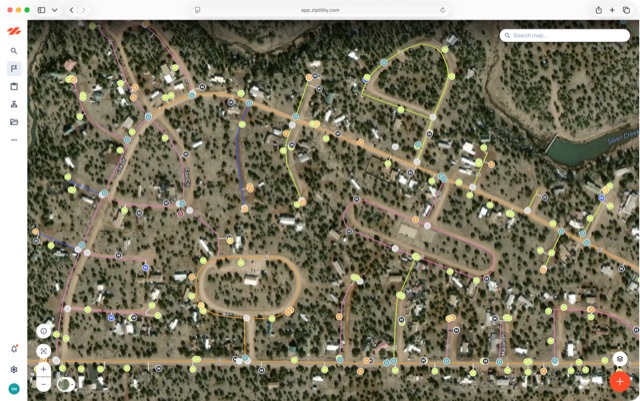
Get every asset onto one map — without a GIS degree.
Run reactive and preventive work from the field.
Turn daily work into the numbers stakeholders want.
A hand-drawn map, a binder of valve records, or a spreadsheet the last super left behind. Take a picture, trace it on your phone, and you're started. No GIS dataset required.
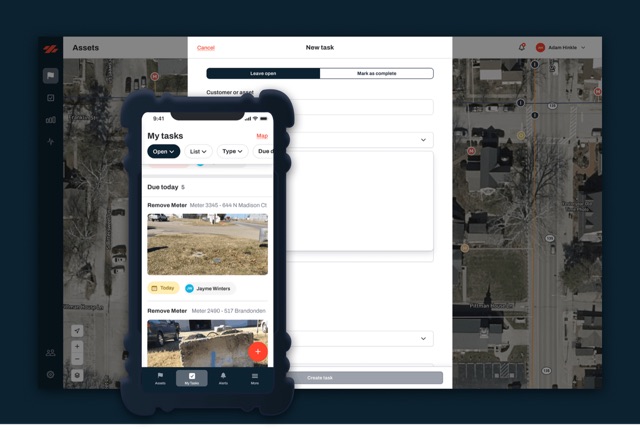
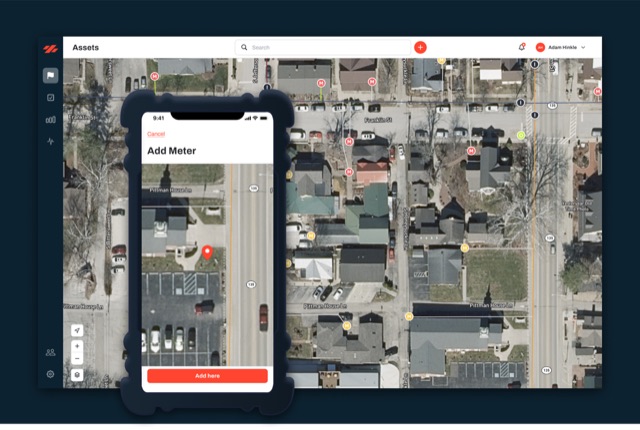
Drop a pin when you touch a valve, hydrant, or meter. Your crew builds the map by doing their normal rounds — unlimited users, so everyone adds what they find.
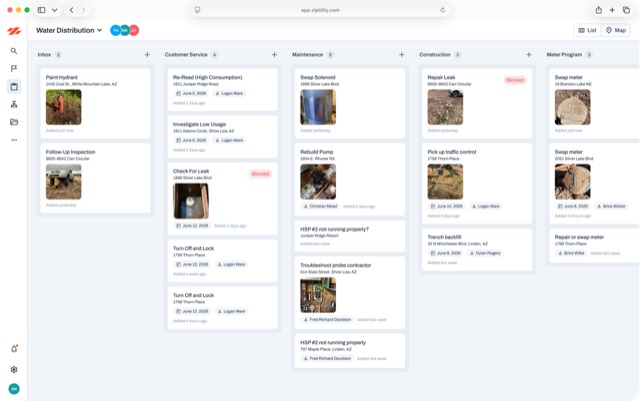
Assign work orders, complete them from the field, log the parts and hours, and watch the asset history fill in. The board gets real numbers; the new hire learns by using it.
 Loved by 1000's of utility professionalsLoved by 1000's of utility professionalsLoved by 1000's of utility professionalsLoved by 1000's of utility professionals
 Create asset-specific maintenance schedules and operationalize preventive maintenance tasksUncover blindspots by visualizing asset conditions and problem areasPromote transparency and accountability on every job with enforceable operating procedures.Create asset-specific maintenance schedules and operationalize preventive maintenance tasksUncover blindspots by visualizing asset conditions and problem areasPromote transparency and accountability on every job with enforceable operating procedures.Up to 500 assetsMobile + web appMap & asset recordsEmail supportUp to 500 assetsMobile + web appMap & asset recordsEmail support
From hydrants to mains, every asset and every job, visible to the whole crew, wherever they are.
Schedules, inspections, and history for every asset, not just the ones you remember.

Valve maps and shut-off sequences on every phone, so the next emergency goes faster.
Small water and wastewater teams across the country quietly keep their systems running on Ziptility. Here's the receipts.
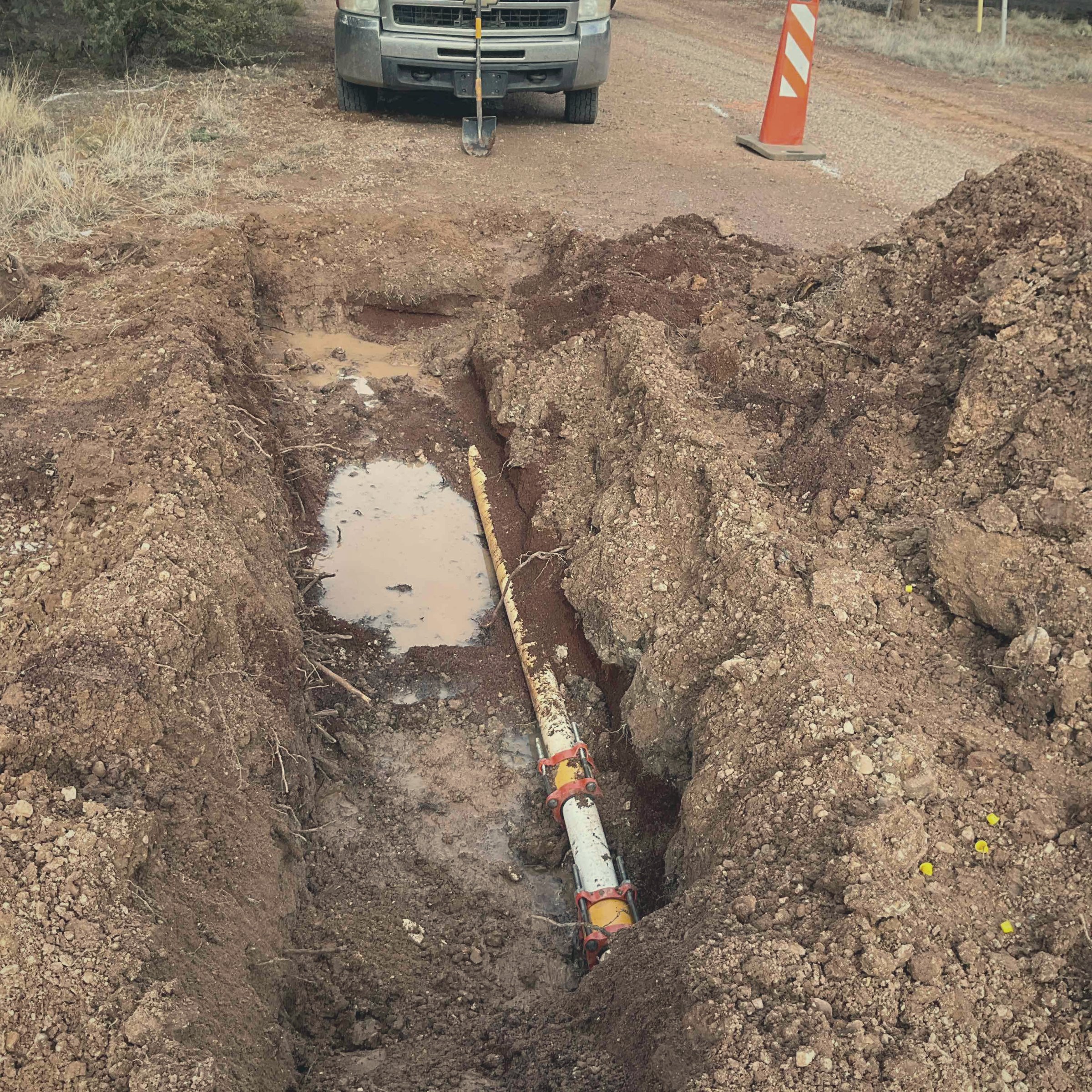 Get the next job, the asset history, and the map without a trip back to the officeClose out tasks with photos and notes right where you standHand off a clean record when the shift changes, or when someone retires
If it takes a manual, it won't get used. Ziptility is built to be obvious on day one, for the whole crew, not just the tech-savvy one.
If it takes a manual, it won't get used. Ziptility is built to be obvious on day one, for the whole crew, not just the tech-savvy one.
Easy-to-use apps for water and wastewater teams that don't take an army to set up or maintain.
Loved by 1000's of utility professionalsTrusted by teams across the country




We started Ziptility in 2019 because the tools made for big cities never fit small systems. So we built one that does, and we're still in the field with you.
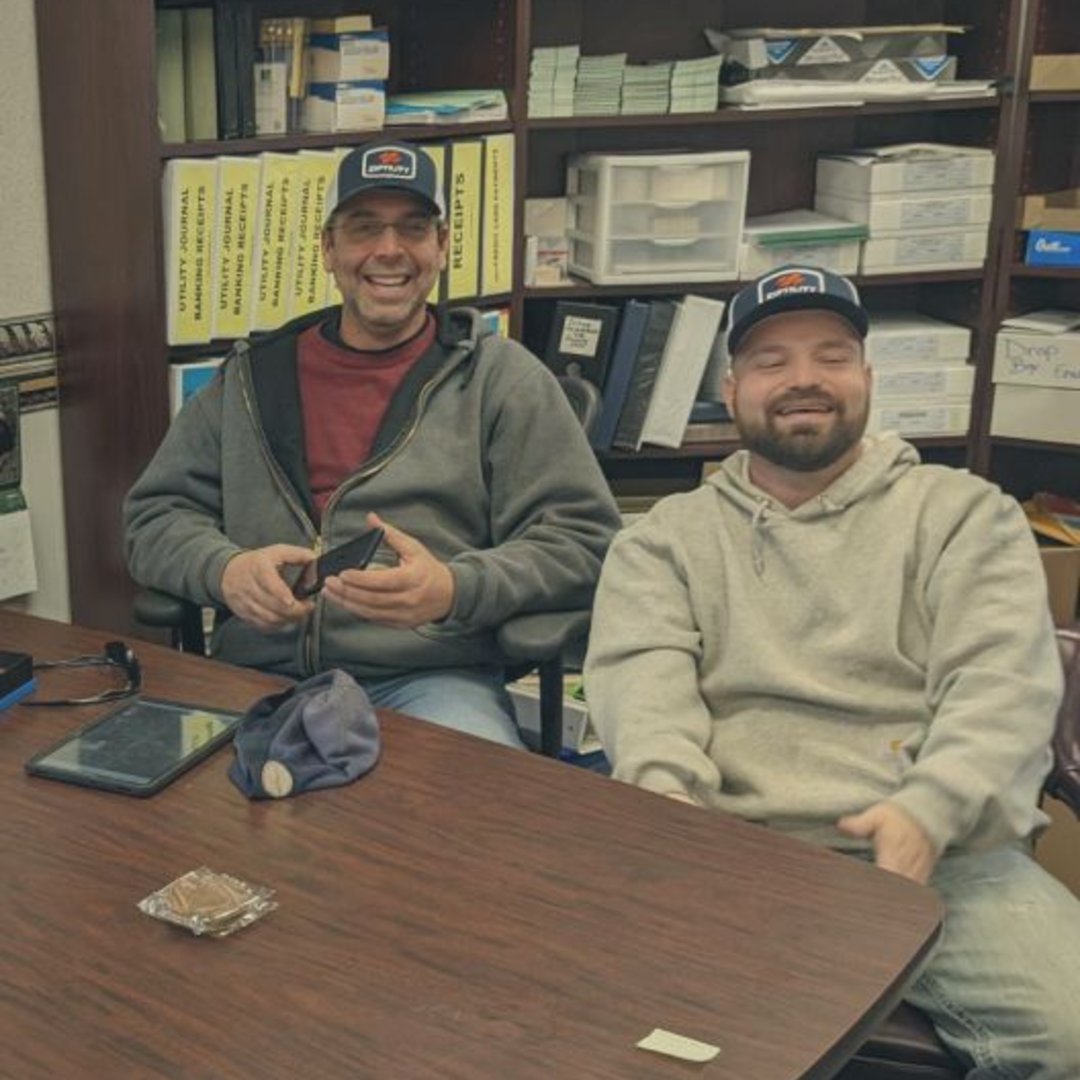



We started Ziptility in 2019 because the tools made for big cities never fit small systems. So we built one that does, and we're still in the field with you.
We started Ziptility in 2019 because the tools made for big cities never fit small systems. So we built one that does, and we're still in the field with you.
every asset on one map with its full history and real cost.
the living map the whole system rides on.
assigning and closing work, tied to the asset.
the locate ticket comes in, and the app creates the asset and the task.
parts, par levels, and the true cost of a repair.
the cost record that backs a rate case and a funding application.
recurring sampling and inspections, with a defensible record.
the flushing, exercising, and inspections that happen on schedule, not when something breaks.
every pipe, valve, pump, and meter with its full history and real cost.
the living map the whole system rides on, current from the field.
the office sends the job, the crew closes it at the asset, the record updates the same minute.
every asset on one map with its full history and real cost.
every asset on one map with its full history and real cost.
every asset on one map with its full history and real cost.
every asset on one map with its full history and real cost.
No digital map, no software, the whole system on paper and in somebody's head. If that is you, you are not behind. You are who this was built for. You start with whatever exists: a paper map, an old shapefile, the billing spreadsheet of meters. We import it, and the map fills in as your crew works. See how getting started works.
It feels too complicated. It costs too much. Nobody in the field really uses it. Plenty of the people who call us cannot point at the one thing that is broken, but their gut says whatever they have is not how running a small system should feel. That gut is usually right: the tool was built for a city department, and you are not one. You do not have to rip anything out. We import your data, run alongside what still works, and give your crew the part they will actually use. See how we compare.
Everything a procurement team asks before the first call.
Here is the thing a lot of operators learn the hard way. A high-maintenance system becomes a low-maintenance system if you maintain it. Run-to-failure is a choice, and a small system can get off it with the crew it already has. Preventive maintenance software is how you set a schedule the crew will actually keep, decide what to service first, and log the work on the asset when it is done. Here is how that works for a system your size.
Reverse media row specimen: the media column sits left at desktop via order -1 on the is-reverse combo; copy stays first in the DOM. Collapses to one column at tablet.
It tells you what to maintain first.
It puts that work on a repeating cycle so nobody has to remember it.
And it logs the job back onto the asset, so the valve, hydrant, or pump carries its own service history.
The clerk creates it, a tech runs it, the office closes it. Turn-ons, shutoffs, meter reads, reconnects.
A high-bill check or a pressure complaint where the outcome is unknown going in, and it might spawn a repair.
A main break or a lift station alarm where everyone drops what they are doing, with the follow-up work (pavement, restoration) spinning off after.
Valve exercising, hydrant flushing, manhole inspection, run by the supervisor in batches on a cycle.
Backflow tests, bacteriological samples, meter tests. They run on a calendar, and the paperwork has to be right.
Found during an inspection, scoped, material ordered, then scheduled when ready.
The restoration and claims work that trails an emergency, tracked separately.
Hub intro copy ships from the locked deck.
Hub sub copy ships from the locked deck.
A sentence of body prose that carries an inline doorway link to the next page in the lane.
Sub line ships from the locked deck.
Dek line ships from the locked deck.