Why small water systems fail
Written for Audubon Southwest's White Mountains Water Projects Tour, August 28, 2026. The numbers are as of that day.
A district serving ninety households is held to the same drinking water standards as Phoenix, and it should be. The child drinking the water does not care how many neighbors they have. But Phoenix divides that cost across a million and a half people. Ninety connections divide it across ninety. Almost everything else follows from that one sentence.
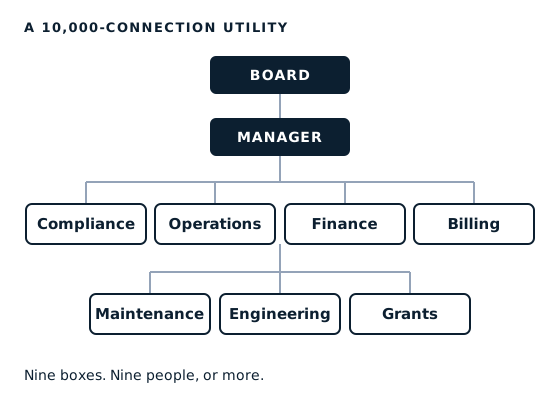
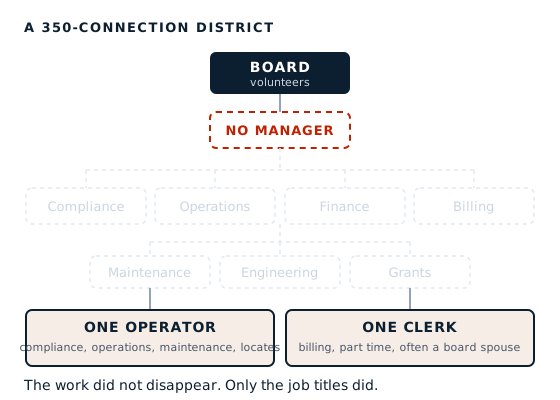
Two real organization charts, side by side. The small one is not a simplified version of the large one. It is the same chart with boxes deleted and the work redistributed onto whoever is left.
Same bills. Ninety customers.
Costs do not scale down
Vendors bill per system, not per customer. A 180-connection district pays the same $400 a month for billing software as a 4,000-connection utility. $2.22 a customer a month against ten cents. Same for the lab, the audit, the insurance, the legal notice.
Pipe does not scale down either
Nationally there are about 290 to 310 people per mile of water main (Utah State University surveys, 2018 and 2023). Contract-operated districts in Navajo County average about 25. One tenth the revenue holding up the same pipe under the same rules.
And it breaks more
Smaller utilities run main break rates about twice those of large ones, by Utah State University's surveys. Older pipe, shallower burial, less money for replacement before it fails, and no crew standing by when it goes.
33,000 pounds of water
33,000 pounds of water: roughly what a rural household using 4,000 gallons a month has pumped, treated, tested and delivered to its tap for a forty-dollar bill.
People will spend fifty dollars on lunch without blinking and then call the office angry about a forty dollar water bill for the month. Nobody does that math, and honestly they should not have to. But it is worth knowing that rural water is not expensive. It is underpriced, and it has been underpriced for fifty years, which is a different problem entirely.
Sources: ADEQ Capacity Development Annual Report FY2024; operating data from contract-operated districts in Navajo County; Utah State University water main break surveys, 2018 and 2023; A.R.S. Title 48, Chapter 6, Article 4.
It is almost never the pipe
The pipe is old everywhere. What breaks first is the money, the training, the memory and the era.
- 1
The books hide the problem
These systems keep cash-basis books. Money in, money out. A year where nothing breaks looks like a year where they broke even, and everyone relaxes.
The pipe is depreciating the whole time. The rule of thumb Blake Anderson teaches boards in the ADEQ track: set aside at least your annual depreciation, and add about ten percent because replacement costs run ahead of book value. Most have never run that calculation once. So they are two or three million dollars behind and feeling fine, right up until a well fails and the account is empty.
- 2
Nobody was trained for the hard half
Systems are graded on technical, managerial and financial capacity. The technical half has certification, training and continuing education behind it. The managerial and financial halves have nothing. A retiree who volunteered for the board inherited a fifty-year-old utility and the instruction: do not mess it up.
- 3
The knowledge is in one head
Where the valve is. Why the chlorinator is set the way it is. Which hydrant is dead. Which customer has the shutoff under a deck. None of it written down, because writing it down was never anyone's paid job.
- 4
It is the payback era
The post-war build-out was paid for with growth money and impact fees, and the true cost of ownership never showed up on a rate sheet. Wells, tanks, mains and controls are now aging out at the same time. The sector has moved from building new to paying to keep what it has, and no small system budgeted for that transition.
The train wreck test
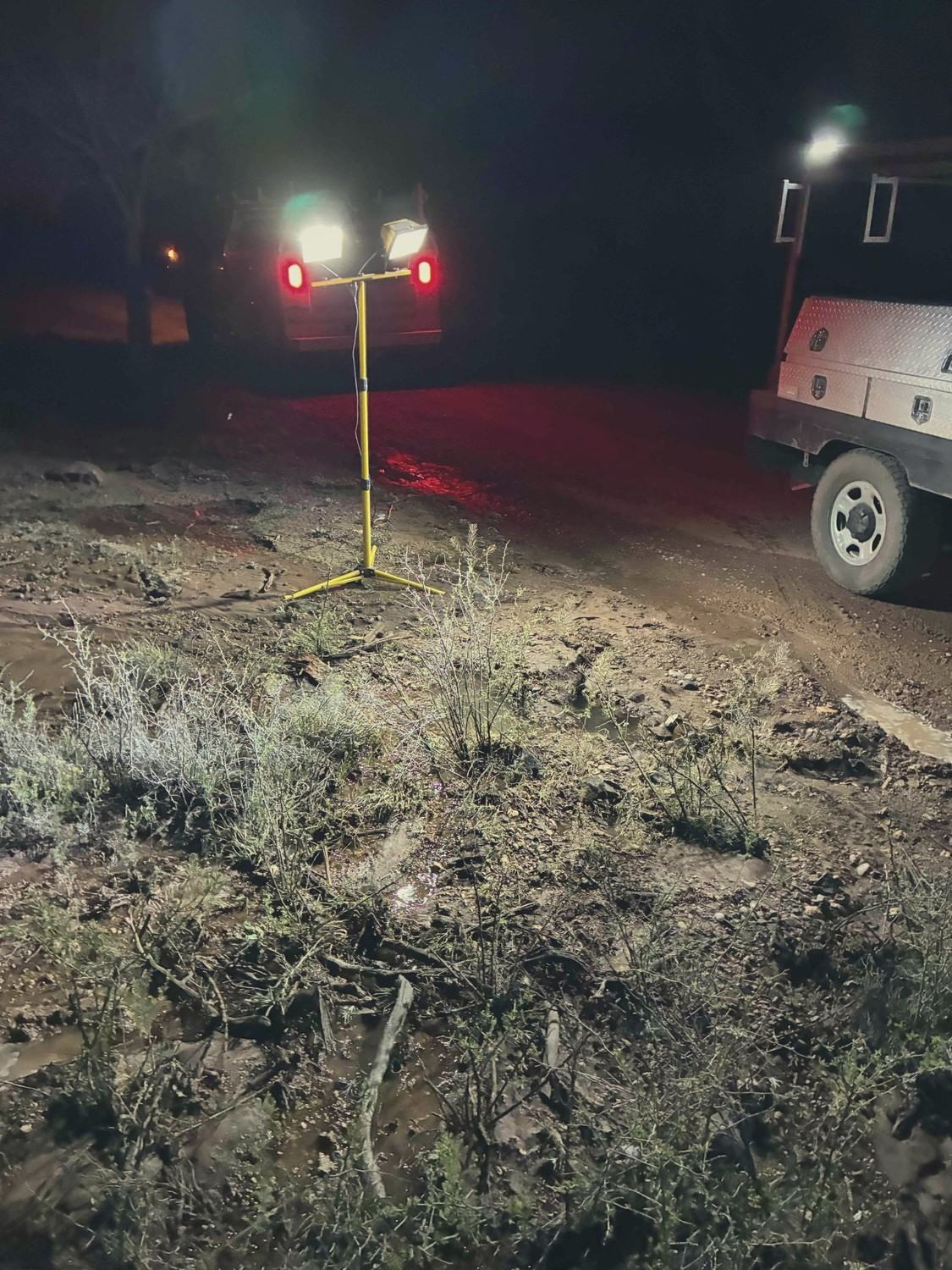
Ask any small system: if one person is hit by a train tomorrow, or the building burns, what disappears? The answer is always the same three things. System knowledge, the passwords, and the billing data.
Two real cases from northern Arizona. In 2002 a Navajo County district lost its maps and customer records in the Rodeo-Chediski fire. A few years ago, in northern Arizona, a privately owned system's sole owner-operator died. No employees, no passwords, no records. The wells went offline until someone came in under an emergency contract.
What does not fix it
Telling them to raise rates. They should, and responsible districts do. But a compliance project the size of Pinedale Estates', spread across ninety households, comes to a per-connection cost the Pinedale Estates page sets out. There is no rate schedule that reaches that number and no bank that lends into it.
What helps
"Small systems do not fail because nobody cares. They fail because the economics are structurally hard, and because we ask a volunteer board to run a capital-intensive public health utility in their spare time."
Money for the paperwork
Not more capital. Capital exists. Pay for the application, the administration and the closeout for systems that already qualify, and eligibility turns into pipe.
Training the other half
Board governance, rate setting, asset management and capital planning. The technical half of capacity has a whole training apparatus. The managerial half has almost nothing.
Shared capacity, local control
One good operator across six systems. Billing and back office run once. Governance stays exactly where it is, with the neighbors who answer for it at the grocery store.
The Field Guide has more for the boards and operators who run systems this size.
Who wrote this, and why it is on ziptility.com
Blake Anderson founded Mogollon Water Management, a water utility operator in Arizona. Under agreements with each district's elected board, Mogollon runs the day-to-day operation of the Heber DWID and Pinedale Estates DWID systems. Ziptility acquired Mogollon in April 2025; Mogollon runs as its own brand with its own team. Heber DWID uses Ziptility's software. Blake developed and teaches ADEQ's management training track for small-system boards and managers, holds Arizona's Grade 4 treatment and distribution certifications, and sits on WIFA's Federal Program Committee as a small-system representative. Nothing on this page speaks for WIFA or for either district; each district's own notices are on its own website. Every figure here is traceable to the sources below.
Sources
Every number on this page comes from one of these. Estimates are marked where they appear.
- ADEQ Capacity Development Annual Report, FY2024: 1,508 regulated public water systems in Arizona as of June 2024, over 95 percent serving fewer than 10,000 people.
- Utah State University, Buried Structures Laboratory, water main break surveys, 2018 and 2023: about 290 to 310 people per mile of water main nationally, and main break rates by utility size.
- EPA, Safe Drinking Water Act §1420, technical, managerial and financial capacity framework (1996 amendments).
- Operating data from contract-operated districts in Navajo and Apache counties, Arizona: about 25 people per mile of main on contract-operated districts in Navajo County; $400 a month for billing software at 180 connections; the two cases in the train wreck test, which name no district, company or person.
- Arizona Revised Statutes, Title 48, Chapter 6, Article 4: domestic water improvement district boards, their size and their powers over rates, debt and infrastructure.
- The depreciation rule, at least annual depreciation plus about ten percent, is Blake Anderson's rule of thumb from ADEQ's management training track, not a published standard.
- 33,000 pounds of water: 4,000 gallons at 8.34 pounds a gallon, the arithmetic on this page.
- The per-connection cost of the Pinedale Estates compliance project: the Pinedale Estates page on this site, which carries the figure and the loan totals it is divided from.
Corrections: blake@mogollonwater.com.
The sheet as handed out on August 28, 2026 is on the tour page with the other four. Where this page and the sheet differ, the page is current.